
Cord 810/812 History
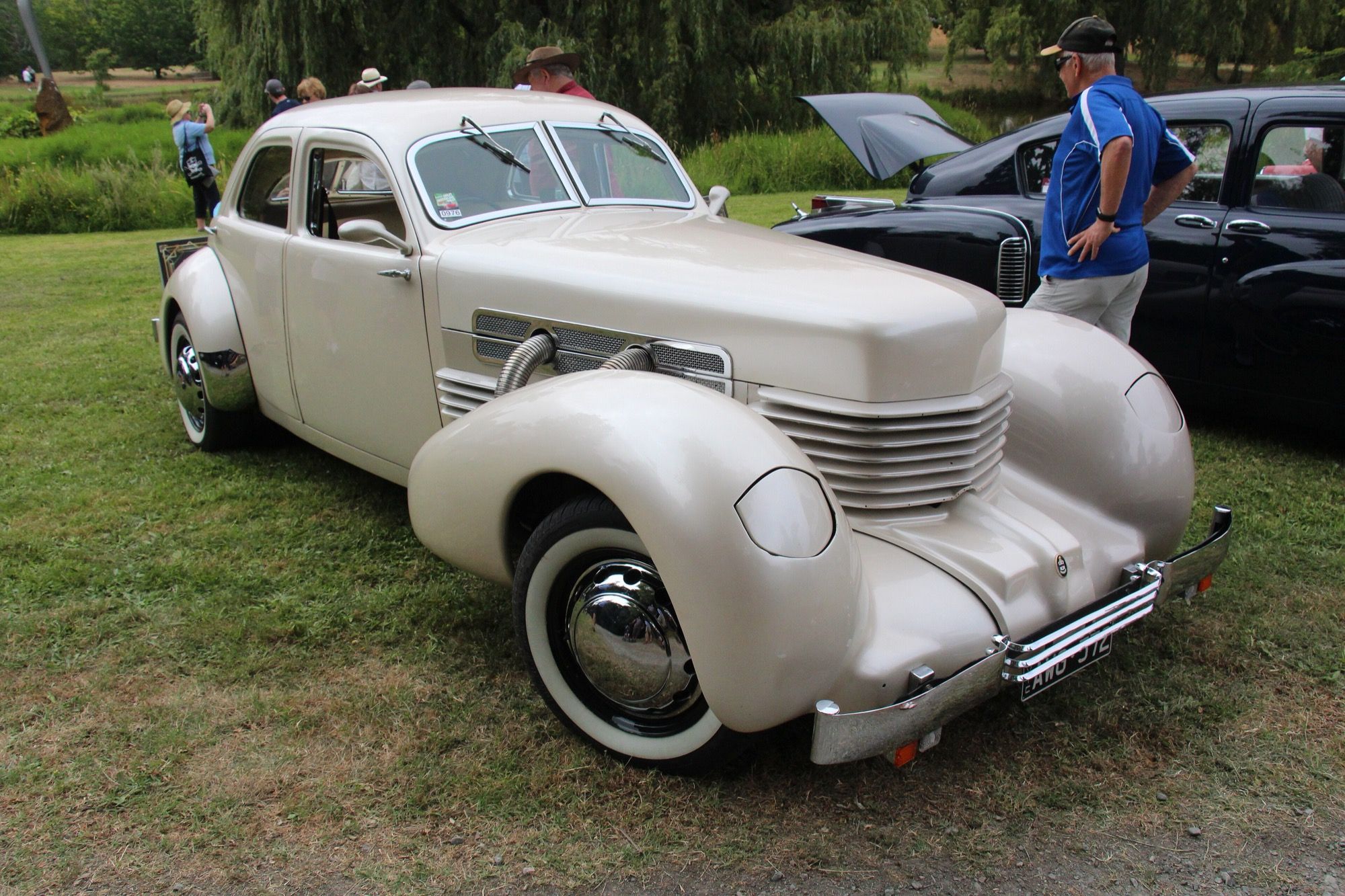
The 'coffin-nose' Cord — the first American production cars with pop-up headlights and front-wheel drive with independent front suspension, just 2,972 built.
Photo: “1936 Cord 810 Westchester Sedan (46121418464)” by Sicnag / Wikimedia Commons, licensed under CC BY 2.0
History
After a four-year absence, Cord returned for 1936 with the 810 — one of the most visually radical automobiles ever to reach an American showroom. Designed by Gordon Buehrig, the coffin-nose (as the press dubbed it) replaced the conventional vertical grille with horizontal louvers that wrapped around the nose of the car. It was also the first American production car with hidden retractable headlights, which swiveled out of the front fenders via hand cranks. Under that futuristic skin sat the first American front-wheel-drive car to feature independent front suspension, paired with a semi-automatic four-speed transmission whose selector was mounted in the dash.
Power came from a 289-cubic-inch (4.7-liter) Lycoming V8 producing 125 horsepower in standard form. An optional Schwitzer-Cummins supercharger raised output to 170 horsepower; supercharged 1936 cars were designated the 810S, the 1937 versions the 812S — instantly identified by the chrome external exhaust pipes flanking the hood. For 1937, the 812 also added two long-wheelbase (132-inch) models — the Custom Beverly and the Custom Westchester berline — expanding the range upmarket. The car debuted at the November 1935 New York Auto Show to sensation, but pre-production delays pushed deliveries into April 1936.
Reliability problems — a transmission prone to slipping out of gear and vapor-lock in the fuel system — hurt the 810/812's reputation, and the dealer network contracted rapidly. Total 810/812 production reached 2,972 cars, including 205 convertible cabriolets, before Auburn Automobile Company shuttered operations in late 1937. Despite its brief life, the 810/812 influenced American automotive design for decades; GM stylists later acknowledged trying to capture its spirit in the 1963 Buick Riviera.
Generations
810 (1936) · Cord 810
Photo: “1936 Cord 810 Westchester Sedan (46121418464)” by Sicnag / Wikimedia Commons, licensed under CC BY 2.0
The debut year — four body styles (sedan, Beverly, Sportsman, Phaeton); supercharged variant designated 810S; delivery delays limited first-year sales to approximately 1,174.
1936 Photo: “1936 Cord 810 Westchester Sedan (46121418464)” by Sicnag / Wikimedia Commons, licensed under CC BY 2.0
812 (1937) · Cord 812
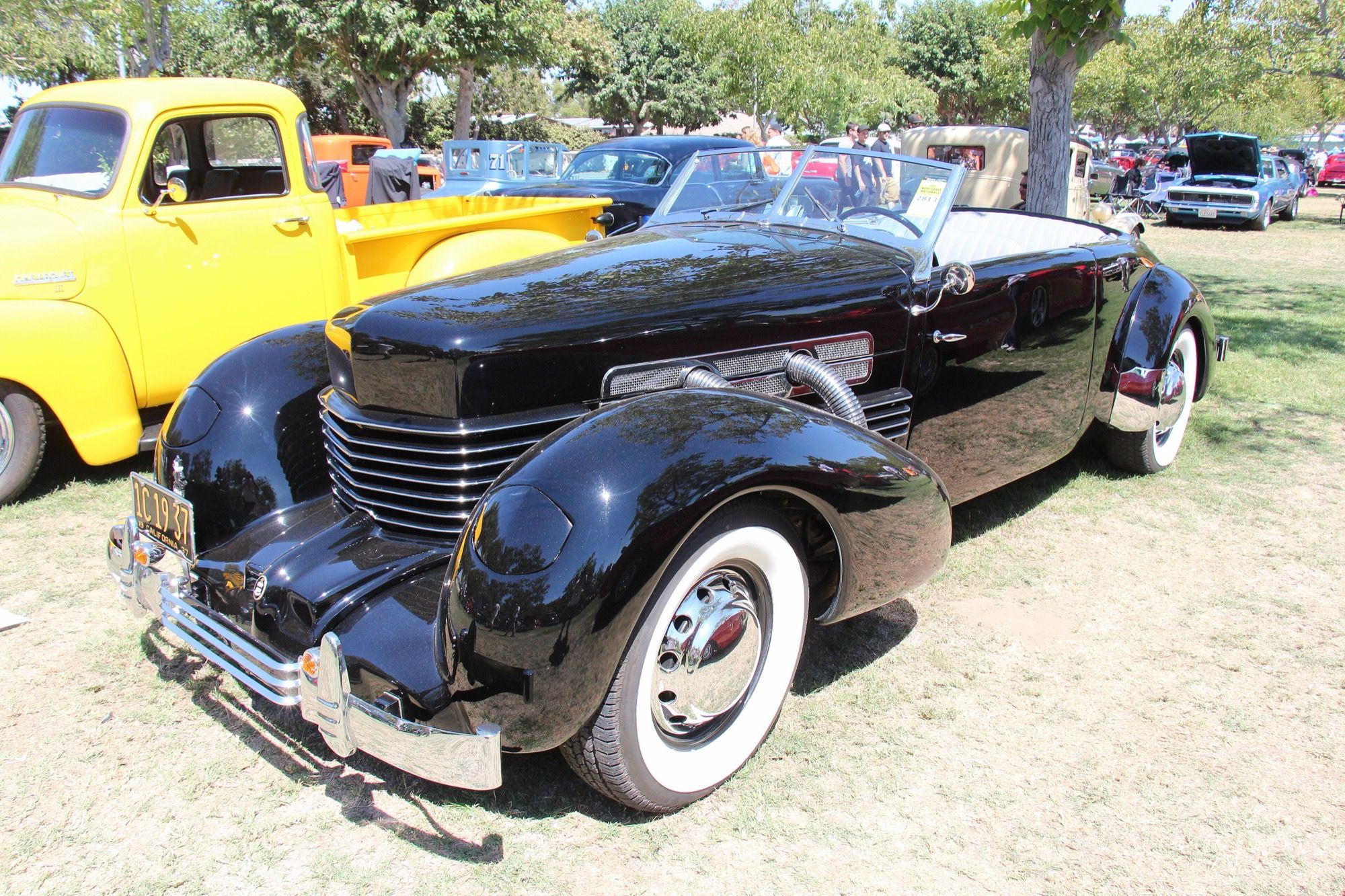
Photo: “1937 Cord 812 Supercharged Cabriolet (21736014742)” by Sicnag / Wikimedia Commons, licensed under CC BY 2.0
Final year; same four short-wheelbase styles plus the new 132-inch-wheelbase Custom Beverly and Custom Westchester berline; supercharged variant designated 812S.
1937 Photo: “1937 Cord 812 Supercharged Cabriolet (21736014742)” by Sicnag / Wikimedia Commons, licensed under CC BY 2.0
Body styles
- Sedan
- Beverly sedan
- Sportsman convertible
- Phaeton convertible
- Cabriolet
- Custom Beverly
- Westchester berline
Notable special editions & performance variants
810S / 812S (Supercharged)
Factory Schwitzer-Cummins supercharger option raising the Lycoming V8 from 125 hp to 170 hp; identified by external exhaust pipes exiting the hood sides.
Custom Beverly / Westchester
Long-wheelbase (132-inch) 812 flagships — the Custom Beverly and the Custom Westchester berline — priced at $2,960 and $3,060 respectively.
Related models
Collect the nameplate
Find a scale model of the Cord 810/812
Search Amazon across available years, colors, and scales. Exact releases vary, so confirm the listing before ordering.