
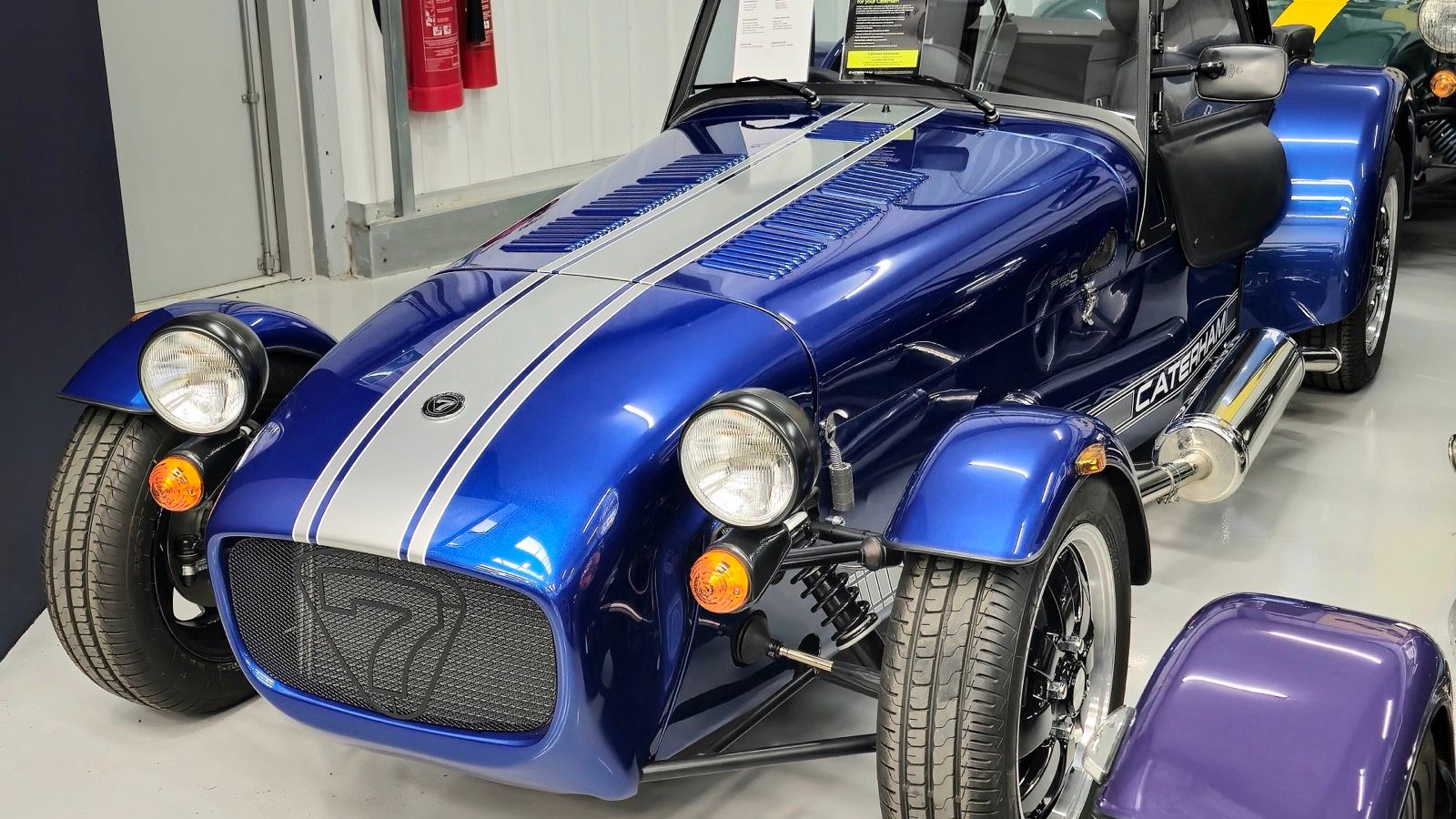
Caterham Seven History
The minimalist Lotus-Seven-derived roadster Caterham has built since 1973 — the definitive featherweight British driver's car.
Photo: “2024 Caterham Seven 170S” by Calreyn88 / Wikimedia Commons, licensed under CC BY-SA 4.0. Cropped to 16:9.
History
Colin Chapman's Lotus designed the Seven in 1957 as a stripped-to-the-essentials, road-legal lightweight that could be sold in kit form. When Lotus decided to drop the car and focus on more upmarket models, Caterham Cars — long the Seven's biggest UK dealer — stepped in: in 1973 founder Graham Nearn purchased the manufacturing rights, tooling, and designs from Colin Chapman. After briefly building the angular Lotus Series 4, Caterham reverted to the classic Series 3 shape from 1974, and that silhouette has defined the car ever since.
Over fifty years Caterham has continually re-engineered the Seven while preserving its 1957 outline: a tubular spaceframe chassis, cycle-wing or clamshell front fenders, and a kerb weight well under 600 kg in most configurations. A wider 'SV' (Series V) chassis was introduced around 2000 to accommodate larger drivers and more powerful engines, sitting alongside the traditional narrow S3 platform. Engines have ranged from Ford crossflow and Cosworth BDR units through the Rover K-series, Ford Sigma and Duratec fours, and from 2013 a tiny turbocharged Suzuki 660 cc three-cylinder powering the entry-level models.
Caterham adopted a numbered naming convention around 2015, with model numbers broadly reflecting horsepower-per-tonne: the entry-level 170 (84 hp Suzuki), through the Ford Duratec-powered 360 and 420, up to the supercharged 620 flagship. A dedicated CSR variant, launched in 2005 with Cosworth-developed Duratec engines and a substantially revised pushrod front and independent rear suspension, represents the most sophisticated interpretation of the Seven formula. The car remains available both factory-complete and as a self-assembly kit, a tradition rooted in the original Lotus Seven's kit-car heritage.
In 2021 Caterham Cars was acquired by VT Holdings, the Japanese company that had been distributing the Seven in Japan since 2009. The company continues to develop the model; an electric prototype was shown at the 2023 Goodwood Festival of Speed, the first serious EV exploration in the car's history.
Generations
Series 3 era · Classic narrow-body (S3 chassis)
Photo: “2024 Caterham Seven 170S” by Calreyn88 / Wikimedia Commons, licensed under CC BY-SA 4.0. Cropped to 16:9.
The 1957 Lotus Series 3 shape Caterham took over in 1973; after a short Series 4 run Caterham reverted to the S3 in 1974 and offers the narrow chassis to this day.
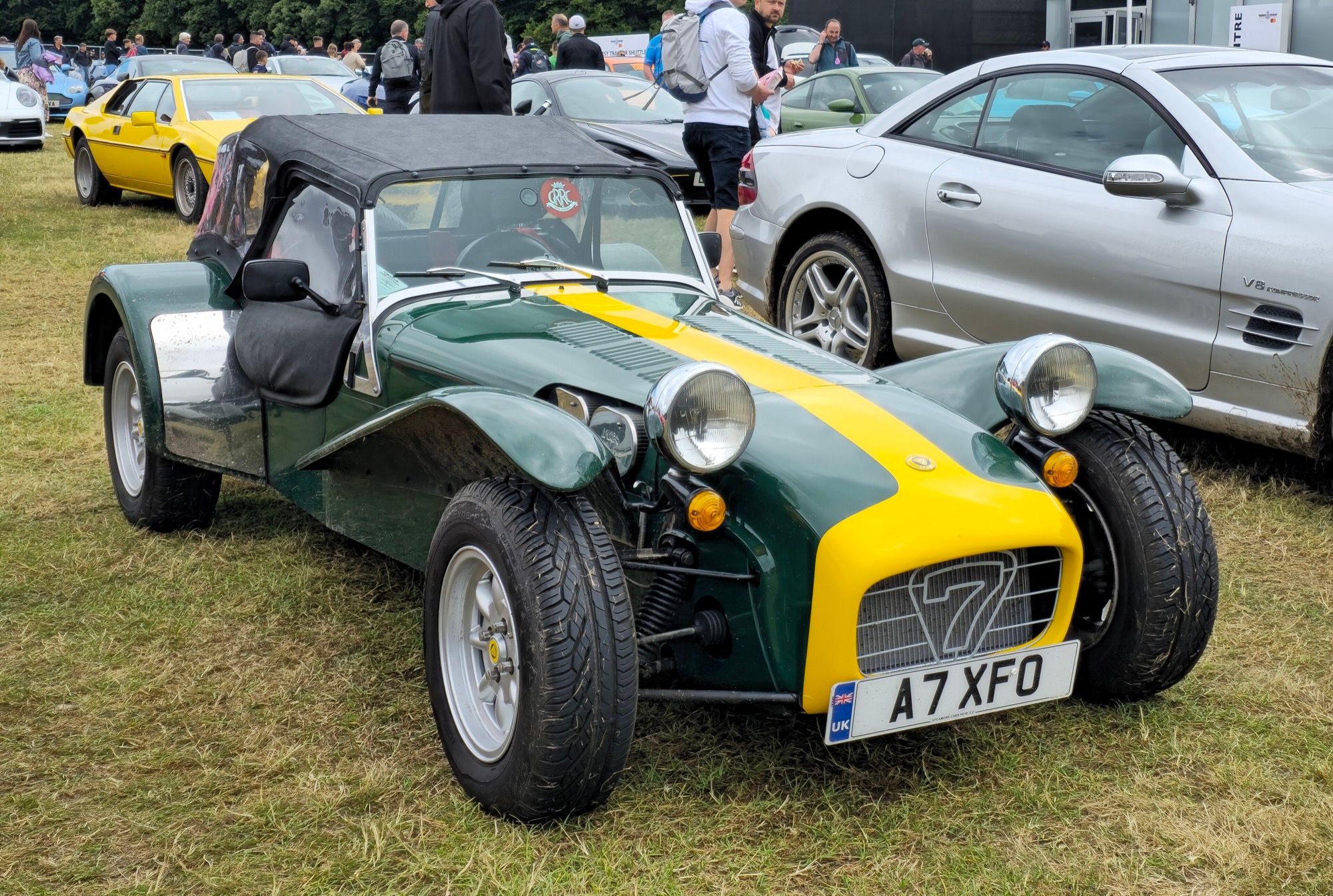
1997 Photo: “1997 Caterham Seven Super Seven” by Calreyn88 / Wikimedia Commons, licensed under CC BY-SA 4.0
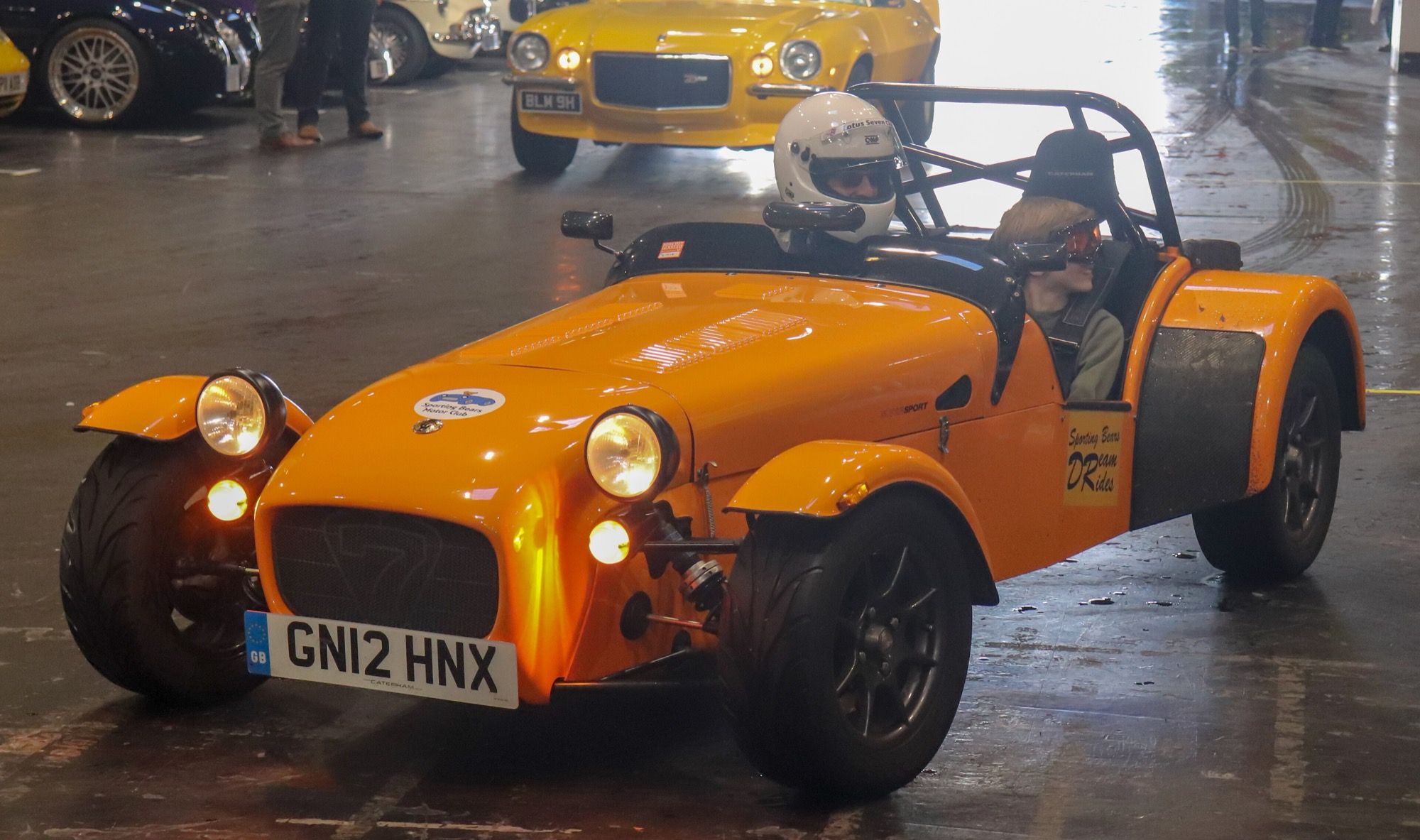
2012 Photo: “2012 Caterham Seven Supersport 1.6” by Vauxford / Wikimedia Commons, licensed under CC BY-SA 4.0
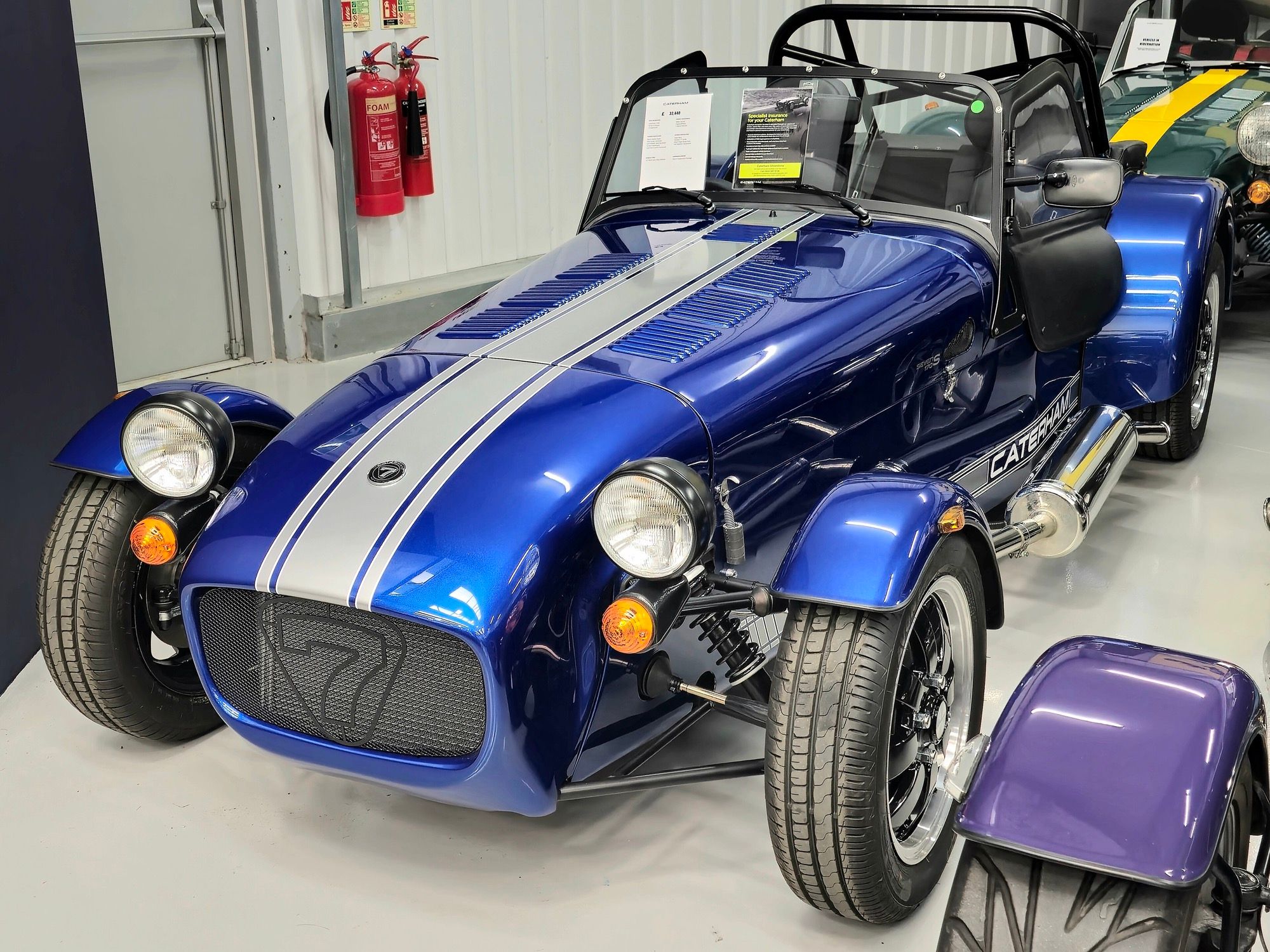
2024 Photo: “2024 Caterham Seven 170S” by Calreyn88 / Wikimedia Commons, licensed under CC BY-SA 4.0
SV / Series-V era · Wide-body SV chassis
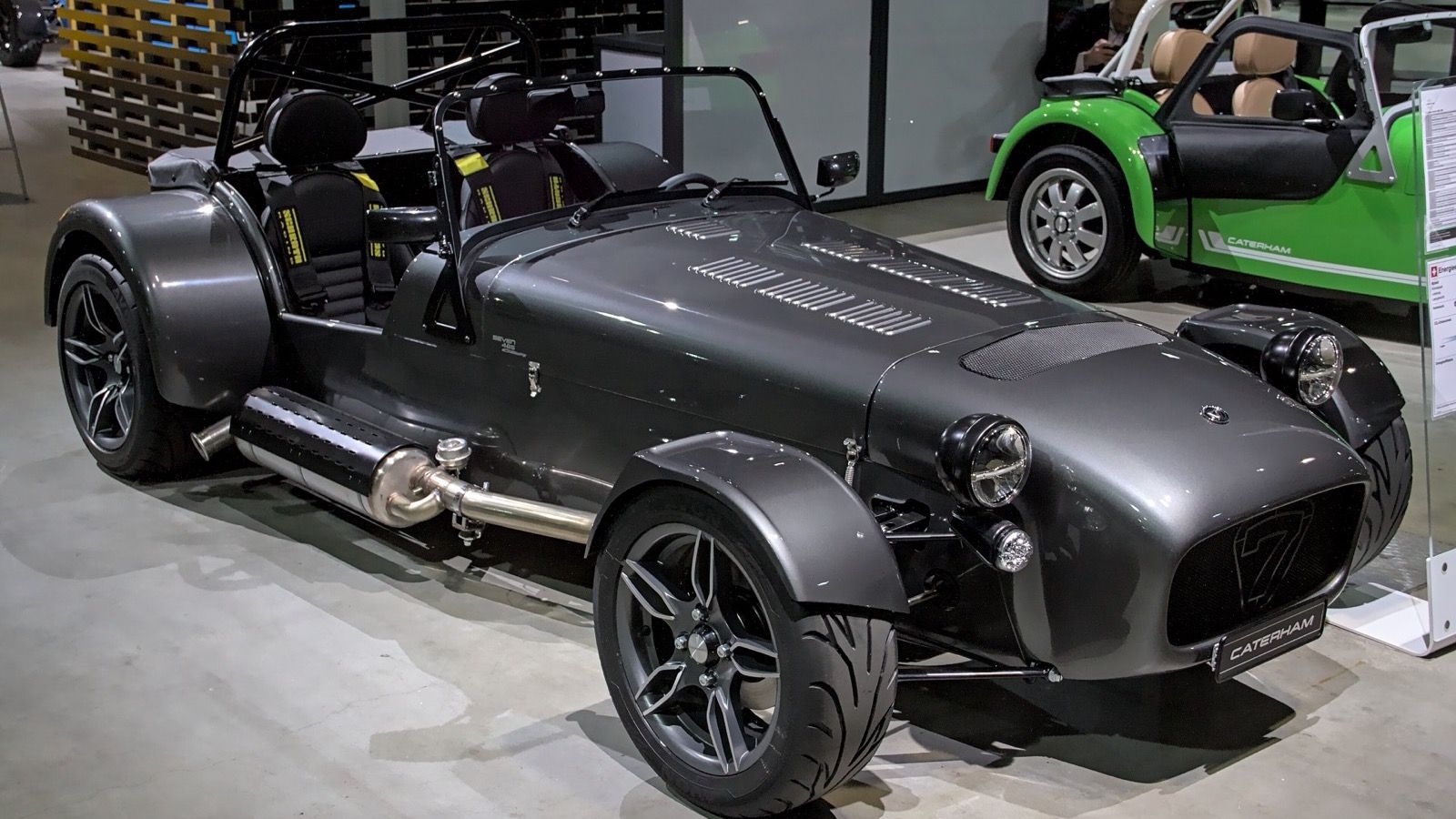
Photo: “Caterham 7 485 CSR Auto Zuerich 2021 IMG 0125” by Alexander Migl / Wikimedia Commons, licensed under CC BY-SA 4.0. Cropped to 16:9.
A wider, longer SV (Series V) chassis introduced in 2000 to accommodate taller drivers and larger engines; adds roughly 110 mm of cockpit width over the S3, is offered alongside it, and underpins the CSR variant.
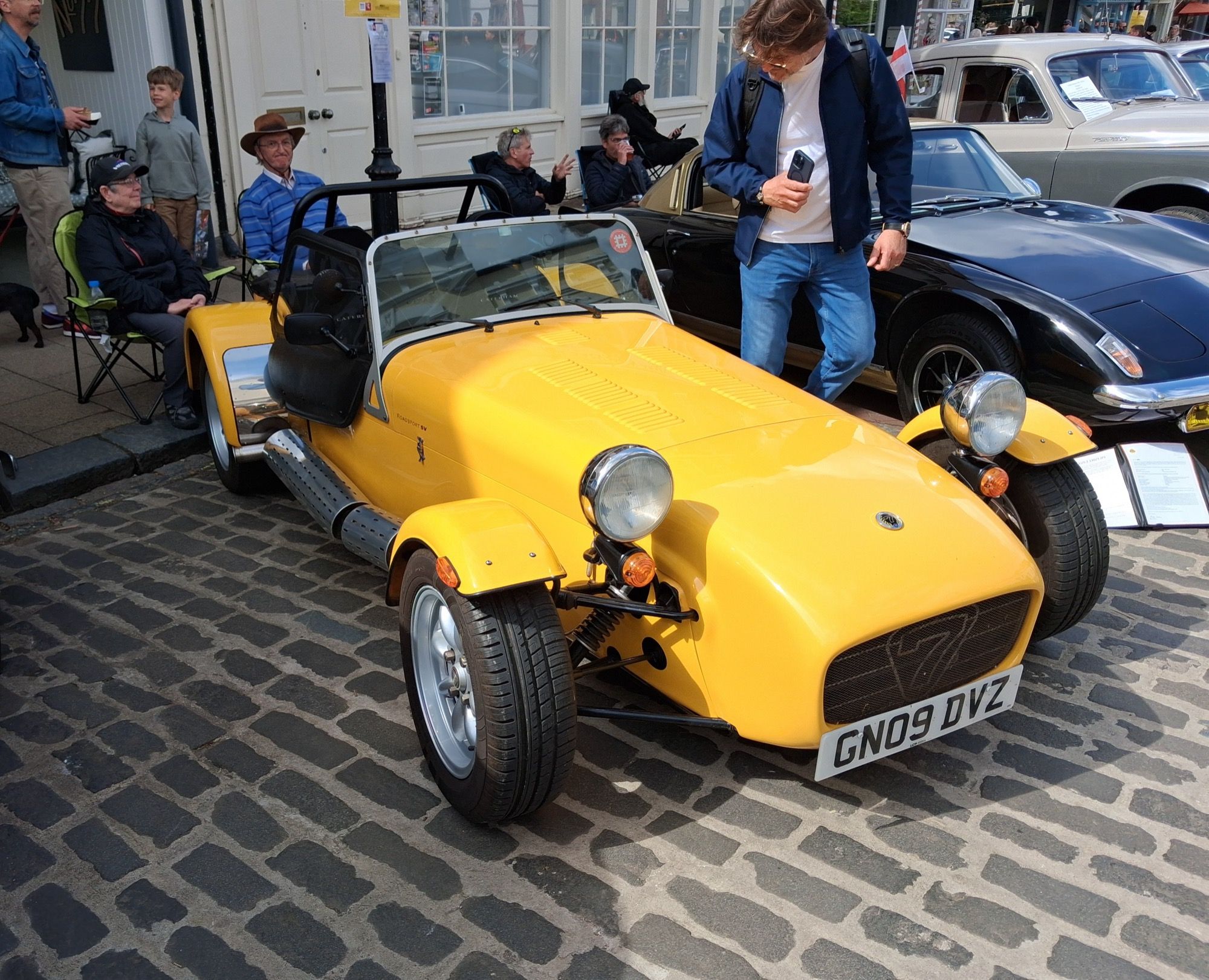
2009 Photo: “2009 Caterham 7” by hugh llewelyn / Wikimedia Commons, licensed under CC BY-SA 4.0
CSR generation · CSR (revised suspension, Cosworth)
SV-based chassis with inboard pushrod front suspension, fully independent double-wishbone rear, and Cosworth-tuned Ford Duratec engines; launched 2005 and significantly raised the Seven's dynamic benchmark.
Body styles
- Open two-seat roadster
Notable special editions & performance variants
JPE (Jonathan Palmer Evolution)
Around 53 cars built with a high-output Vauxhall touring-car engine producing approximately 250 bhp; developed with ex-Formula 1 driver Jonathan Palmer as the most extreme Seven of its era. Production run tailed off through the 1990s (sources vary; exact end year is not firmly documented).
Superlight R500
230–263 bhp in a 460 kg package; a Rover K-series (later Duratec) Superlight that set a 0–100–0 mph record of 10.73 seconds in 2004.
160 / 165 / 170
Entry-level Sevens with a turbocharged 660 cc Suzuki three-cylinder (80–84 hp); 160/165 from 2013, replaced by the 170 (Suzuki R06A engine) from 2021 to meet WLTP emissions standards.
620R / 620S
Flagship Seven: supercharged 2.0-litre Ford Duratec producing around 310 bhp; factory-built only; 0–60 mph in approximately 2.8 seconds from about 500 kg.
CSR Twenty
Limited run of 20 cars marking 20 years of the CSR variant; features carbon-fibre components and enhanced specification.
Related models
Collect the nameplate
Find a scale model of the Caterham Seven
Search Amazon across available years, colors, and scales. Exact releases vary, so confirm the listing before ordering.