
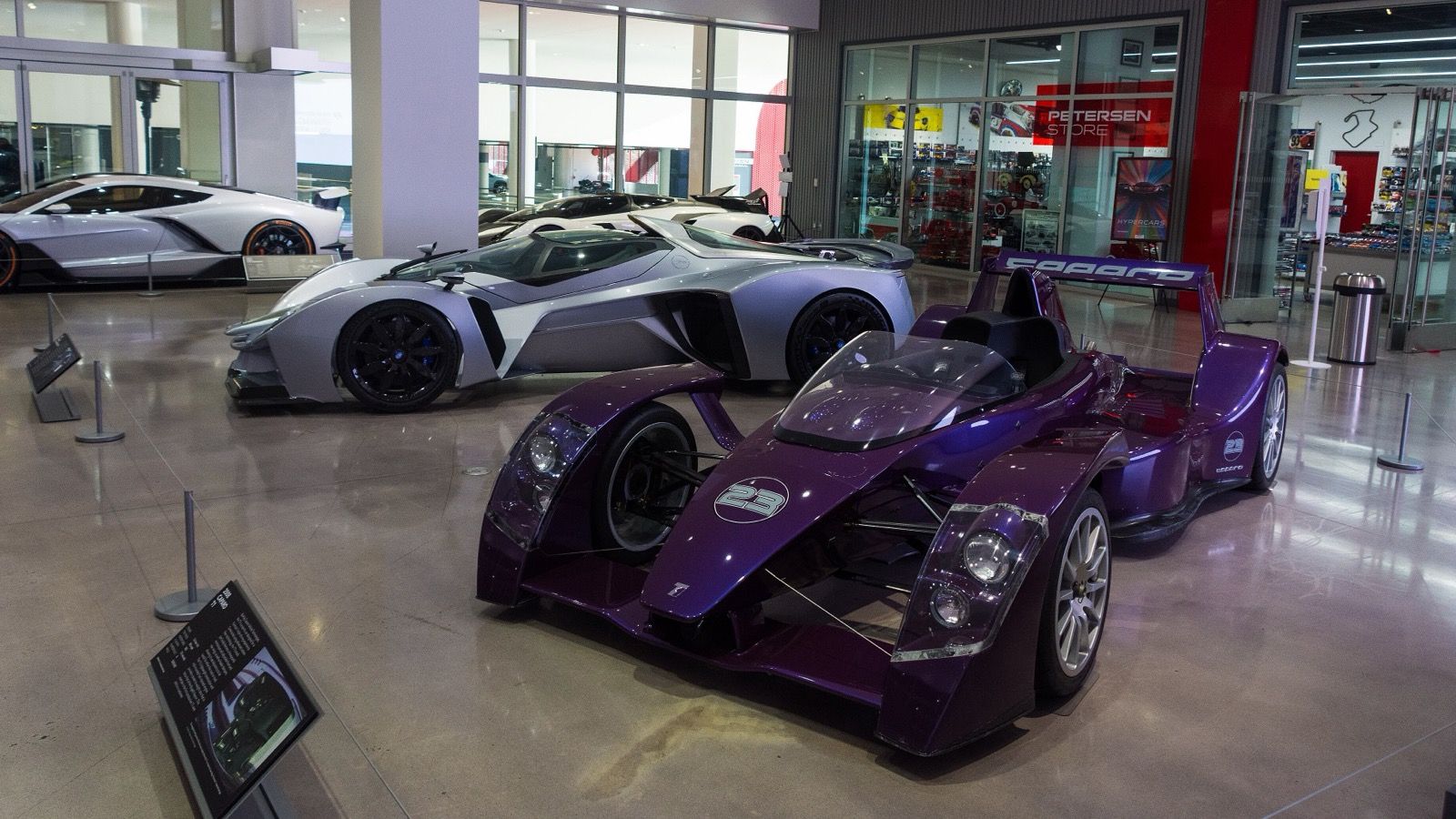
Caparo T1 History
A 575 bhp, 470 kg, road-legal supercar built by ex-McLaren F1 engineers — only 15 were ever completed before Caparo collapsed in 2015.
Photo: “RKR 7651 (52142781122).jpg” by Robert Rouse from United States / Wikimedia Commons, licensed under CC BY 2.0. Cropped to 16:9.
History
The T1 originated as the Freestream T1, conceived in 2004 by Ben Scott-Geddes (design director) and Graham Halstead (engineering director), both veterans of the McLaren F1 project. Their goal was audacious: a road-legal car with Formula One levels of aerodynamic downforce and power-to-weight. In February 2006 Freestream announced the concept, and a month later the Caparo group — a diversified British industrial conglomerate — acquired the company and rebranded it Caparo Vehicle Technologies. The T1 was officially unveiled by Prince Albert II of Monaco at the Top Marques show in April 2006.
The production T1 was engineered around a carbon-fibre monocoque weighing just 470 kg. Power came from a 3,496 cc (3.5-litre) naturally-aspirated Menard V8 revving to 10,500 rpm and producing 575 bhp, giving a power-to-weight ratio of approximately 1,223 bhp per tonne. The aerodynamic package — adjustable front and rear wings combined with a venturi-effect ground-effect floor — was claimed to generate 875 kg of downforce at 240 km/h. Road-legal price was set at £235,000. Caparo planned roughly 25 cars per year assembled at Basingstoke, Hampshire.
Real-world testing in late 2007 exposed serious reliability problems. During Fifth Gear filming in October 2007, racing driver Jason Plato suffered burns when his prototype caught fire at approximately 160 mph; the cause was identified as a faulty oil-sealing component. Jeremy Clarkson's Top Gear test around the same period revealed a loose floor panel, fuel-injection faults, suspension issues, and a stuck throttle; his lap time was subsequently withdrawn when the car failed to negotiate a speed bump. Despite these setbacks Caparo pressed on with deliveries, ultimately completing around 15 cars before the parent Caparo group fell into financial difficulty — driven largely by volatility in the steel market — and Caparo Vehicle Technologies entered administration on 19 October 2015. The company was fully dissolved by 2019.
Generations
T1 · Caparo T1
Photo: “RKR 7651 (52142781122).jpg” by Robert Rouse from United States / Wikimedia Commons, licensed under CC BY 2.0. Cropped to 16:9.
Carbon-fibre monocoque, 470 kg, 3.5-litre 575 bhp Menard V8 revving to 10,500 rpm; a single unchanged design across the run, of which only about 15 were completed.
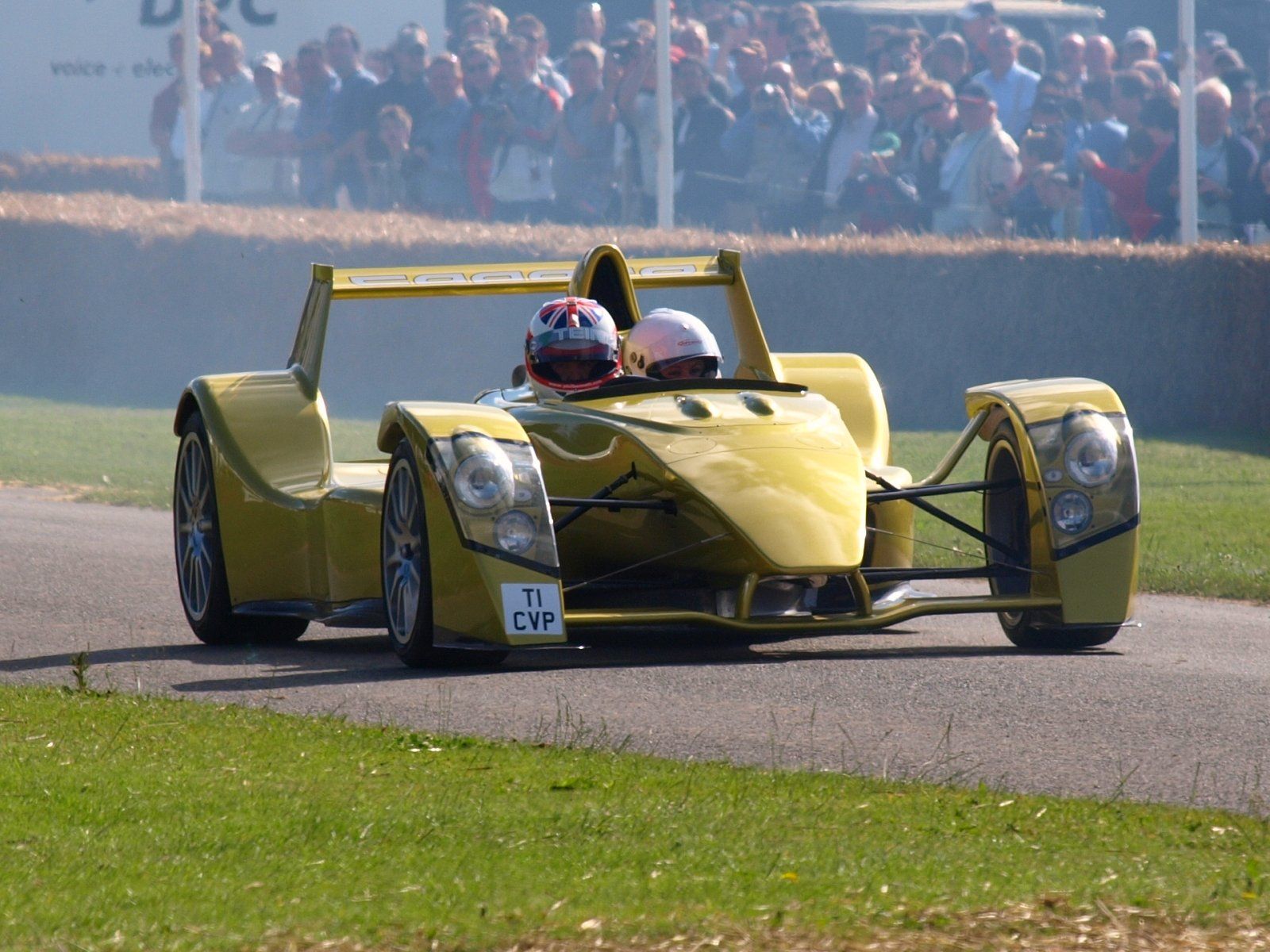
2008 Photo: “Caparo T1 Goodwood July 12, 2008 by estoril.jpg” by estoril / Wikimedia Commons, licensed under CC BY 2.0
Body styles
- Open two-seat roadster (road-legal)
Notable special editions & performance variants
T1 Race Extreme
Higher-output variant announced in March 2009: same 3.5-litre Menard V8 tuned to around 620–625 bhp (sources vary) at 10,500 rpm, dry weight 550 kg, 0–62 mph in 2.8 s, top speed ~208 mph; ceramic brakes and fully adjustable suspension. No separate delivery figures were ever published — the Race Extreme was folded into the roughly 15 total T1s completed before the 2015 collapse.
T1 Evolution
Final announced variant with a claimed 700 bhp output (methanol-capable engine), revealed in 2014 with updated chassis, aerodynamics and driver aids; Caparo entered administration the following year and the Evolution was never actually built — no customer cars were delivered to this spec.
Related models
Collect the nameplate
Find a scale model of the Caparo T1
Search Amazon across available years, colors, and scales. Exact releases vary, so confirm the listing before ordering.