
Bugatti Type 57 History
Bugatti's prewar grand tourer masterpiece — 710 built, including the four legendary Type 57SC Atlantics; won Le Mans in 1937 and 1939.
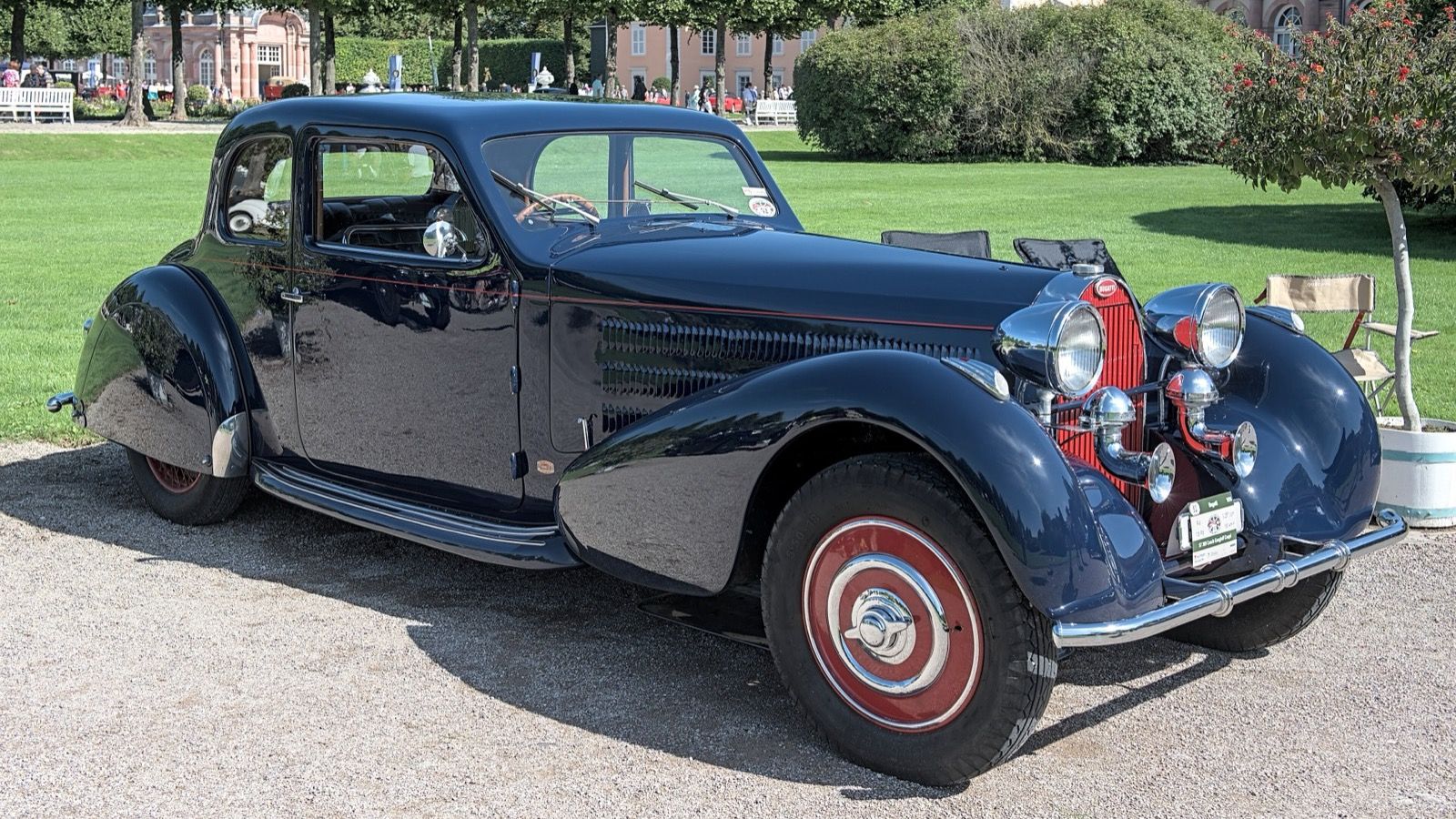
Photo: “1936 Bugatti Type 57 Coupe Coach by Gangloff Classic-Gala 2025 DSC 1003.jpg” by Alexander Migl / Wikimedia Commons, licensed under CC BY-SA 4.0. Cropped to 16:9.
History
Designed primarily by Jean Bugatti and introduced in 1934, the Type 57 used a new 3.257-litre twin-cam straight-eight engine of Jean's own design, a significant departure from the single-cam units of earlier touring Bugattis. A total of 710 cars were produced across several variants — the standard Type 57, the lowered Type 57S, the supercharged Type 57C, and the supercharged low-chassis Type 57SC — before World War II halted production in 1940.
The Type 57's most celebrated body is the Atlantic, a design that originated with the 1935 Aérolithe show car built from Elektron magnesium alloy (which could not be welded, so its panels were riveted, creating the distinctive external dorsal spine). The production Atlantics — just four built between 1936 and 1938 — used aluminium body panels but retained the riveted ridge as a signature stylistic element. Three of the four Atlantics survive and each has sold or been valued at well over €30 million; they are consistently listed among the most beautiful and valuable cars ever made.
On the racing side, the Type 57G 'Tank' streamliner won the 24 Hours of Le Mans in both 1937 and 1939; the 1939 victory, secured by Jean-Pierre Wimille and Pierre Veyron (whose name would later grace Bugatti's 2005 hypercar) with minimal resources, came just weeks before the war ended all motorsport. Jean Bugatti died in a test-driving accident in August 1939, and Ettore Bugatti died in 1947, leaving the company without its guiding spirits.
Generations
Type 57 · Standard chassis
Photo: “1936 Bugatti Type 57 Coupe Coach by Gangloff Classic-Gala 2025 DSC 1003.jpg” by Alexander Migl / Wikimedia Commons, licensed under CC BY-SA 4.0. Cropped to 16:9.
The base grand tourer on the standard-height chassis; various coachbuilt bodies including Gangloff coupe and cabriolet.
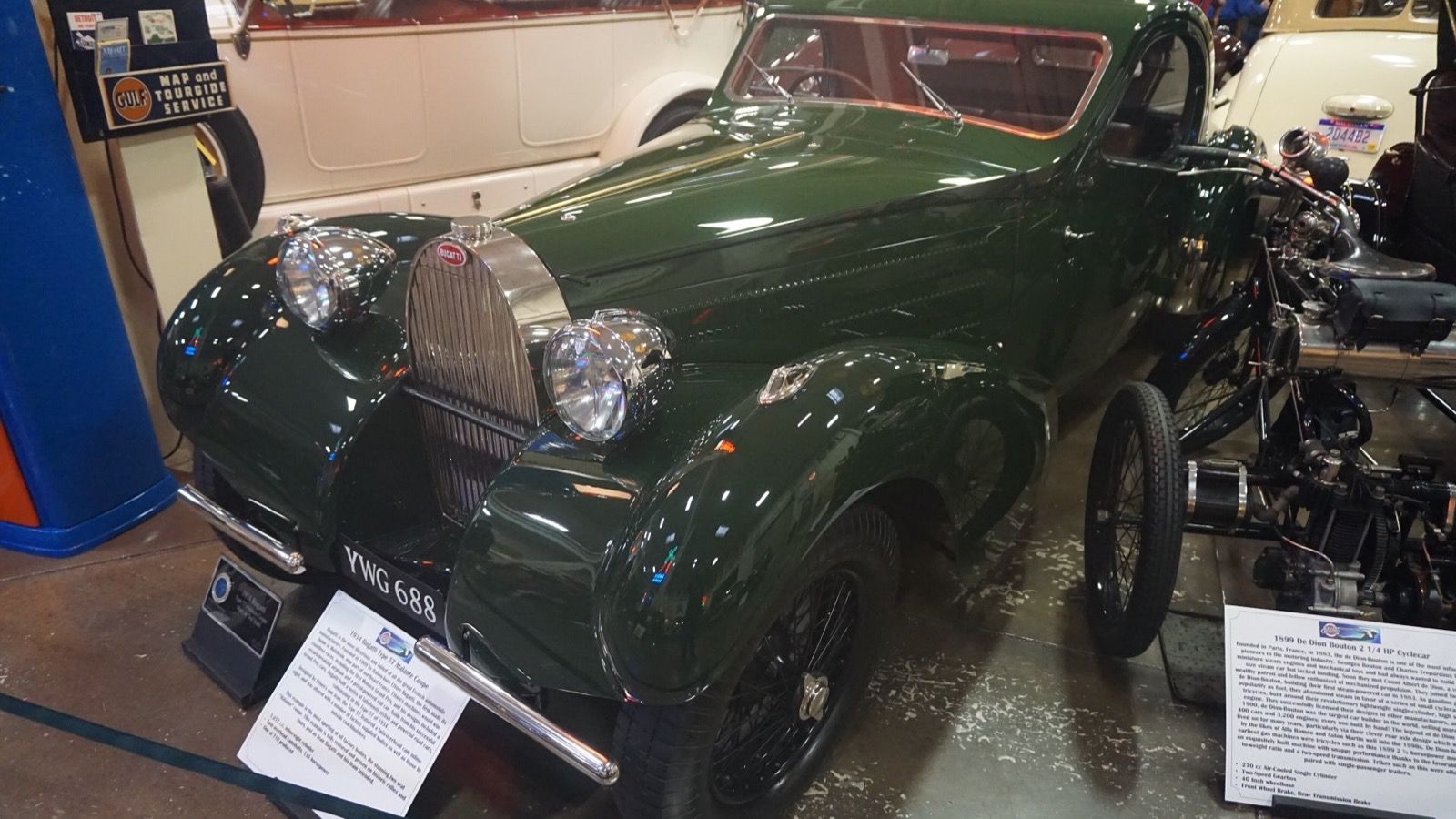
1934 Photo: “Stahls Automotive Collection December 2021 106 (1934 Bugatti Type 57 Atalante Coupe).jpg” by Michael Barera / Wikimedia Commons, licensed under CC BY-SA 4.0. Cropped to 16:9.
1936 Photo: “1936 Bugatti Type 57 Coupe Coach by Gangloff Classic-Gala 2025 DSC 1003.jpg” by Alexander Migl / Wikimedia Commons, licensed under CC BY-SA 4.0. Cropped to 16:9.
Type 57S · Surbaissé (lowered) chassis
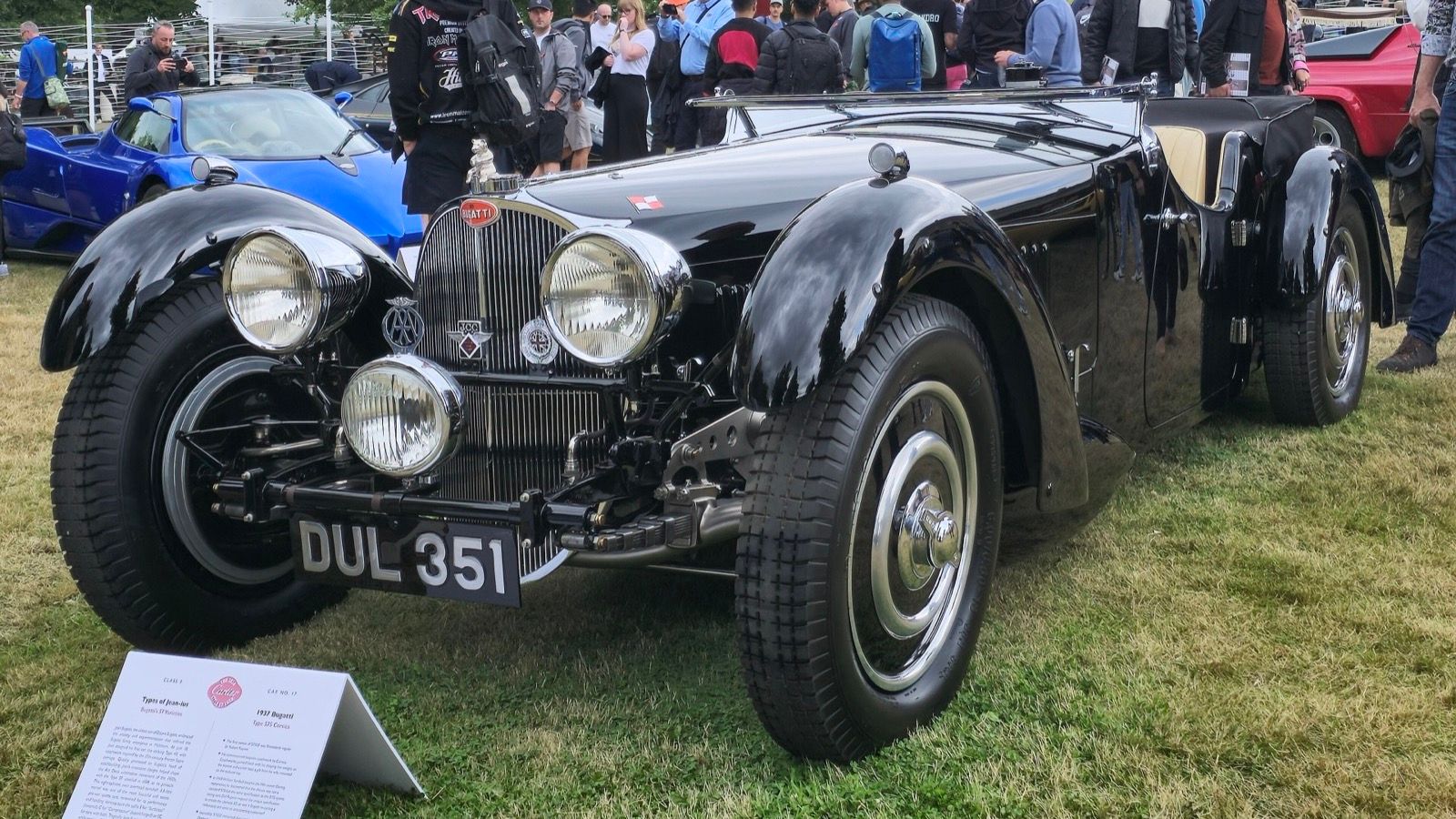
Photo: “1937 Bugatti Type 57S Corsica.jpg” by Calreyn88 / Wikimedia Commons, licensed under CC BY-SA 4.0. Cropped to 16:9.
Lowered chassis with de Dion rear axle; the platform for the Atlantic body.
1937 Photo: “1937 Bugatti Type 57S Corsica.jpg” by Calreyn88 / Wikimedia Commons, licensed under CC BY-SA 4.0. Cropped to 16:9.
Type 57C / 57SC · Supercharged variants
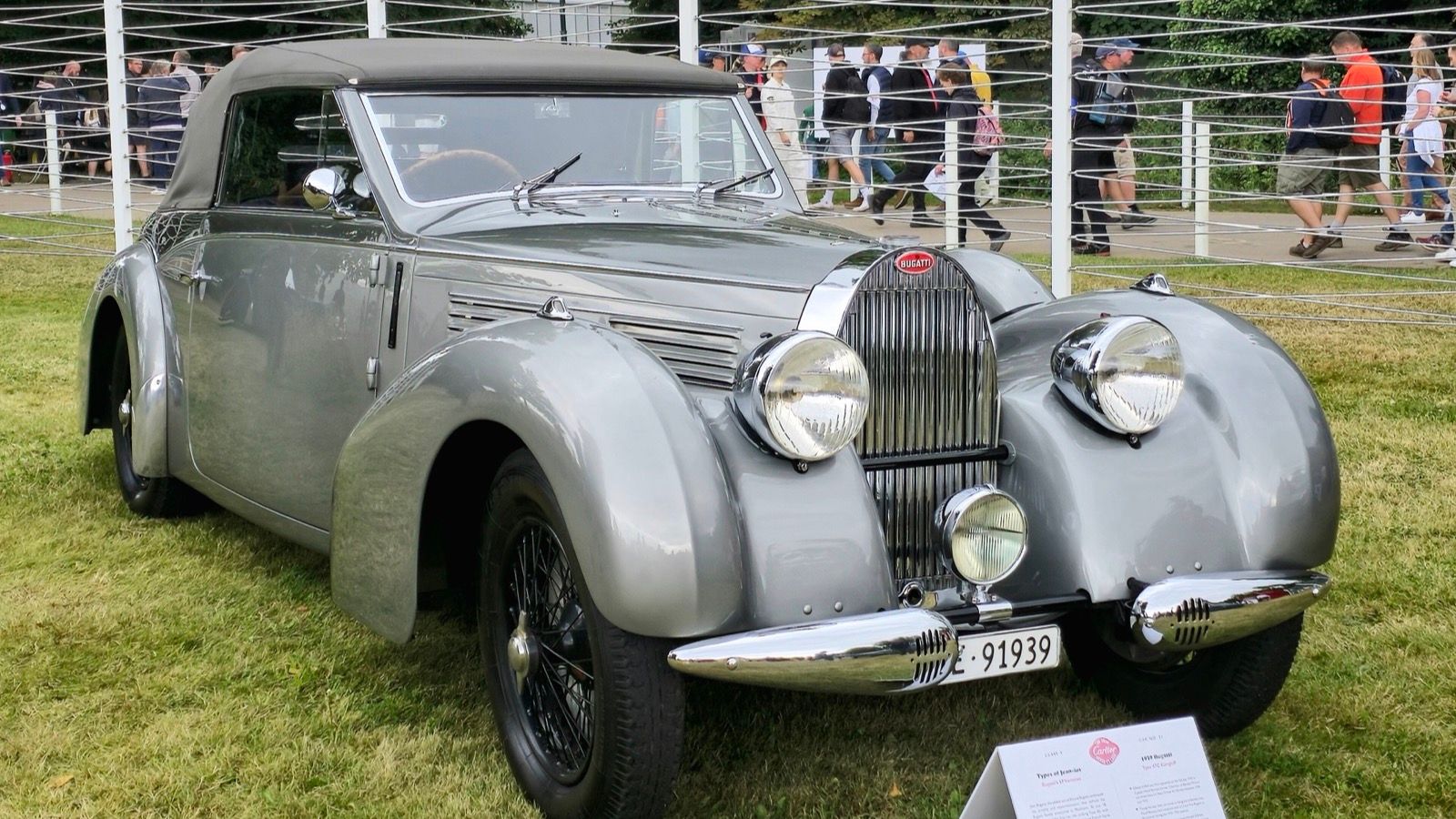
Photo: “1939 Bugatti Type 57C Gangloff.jpg” by Calreyn88 / Wikimedia Commons, licensed under CC BY-SA 4.0. Cropped to 16:9.
Roots supercharger added to standard (57C) or low (57SC) chassis; approximately 200 hp in SC form.
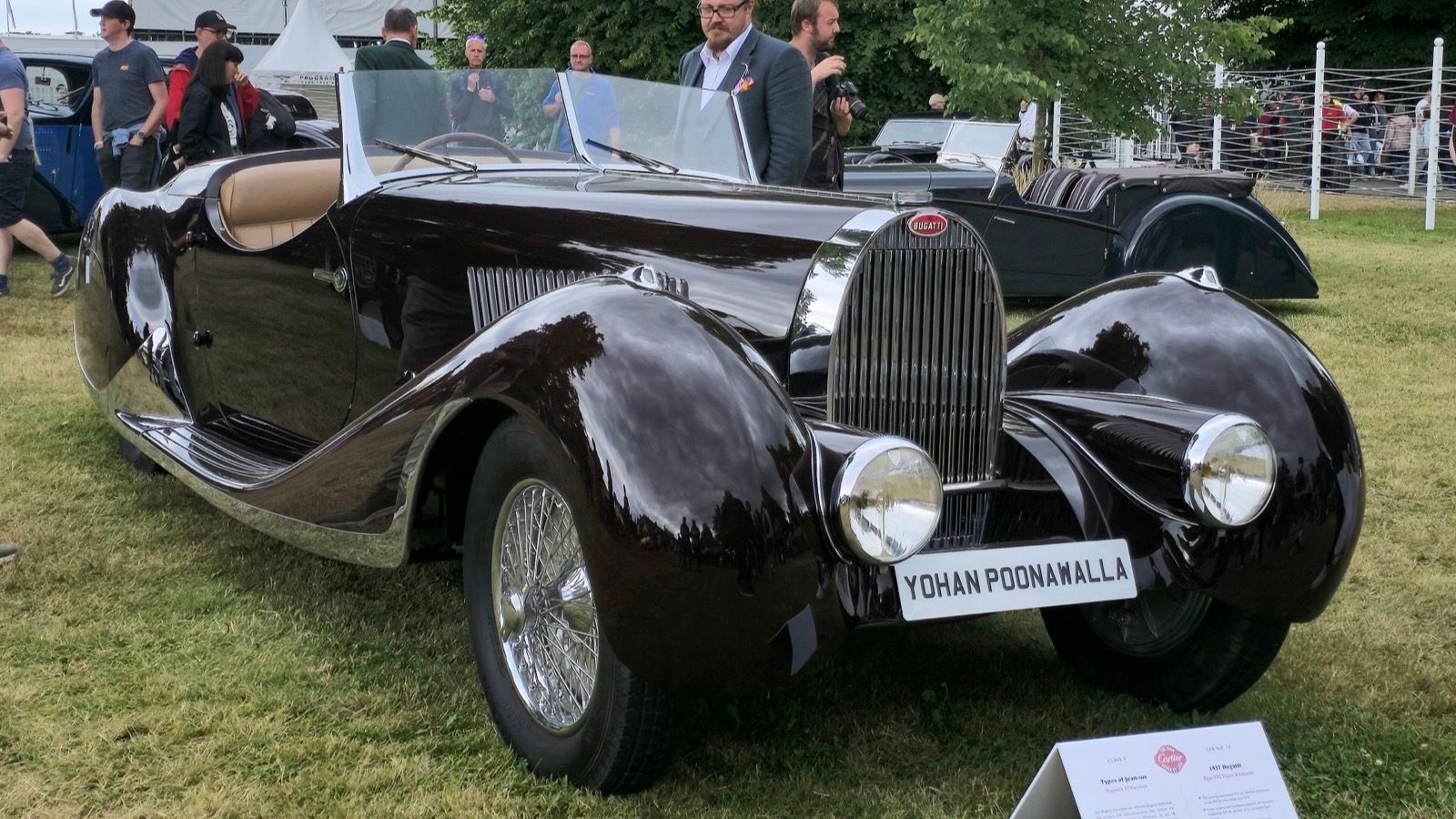
1937 Photo: “1937 Bugatti Type 57C Figoni & Falaschi.jpg” by Calreyn88 / Wikimedia Commons, licensed under CC BY-SA 4.0. Cropped to 16:9.
1939 Photo: “1939 Bugatti Type 57C Gangloff.jpg” by Calreyn88 / Wikimedia Commons, licensed under CC BY-SA 4.0. Cropped to 16:9.
Body styles
- Coupe
- Cabriolet
- Roadster
- Racing car
Notable special editions & performance variants
Type 57SC Atlantic
Four built; riveted dorsal-spine aluminium coupe body on the supercharged low chassis — among the most valuable cars in existence.
Type 57G 'Tank'
Enclosed streamliner racing body; won Le Mans 1937 and 1939.
Type 57 Atalante
Jean Bugatti-styled fixed-head coupe body, produced on both standard and S chassis.
Related models
Collect the nameplate
Find a scale model of the Bugatti Type 57
Search Amazon across available years, colors, and scales. Exact releases vary, so confirm the listing before ordering.