
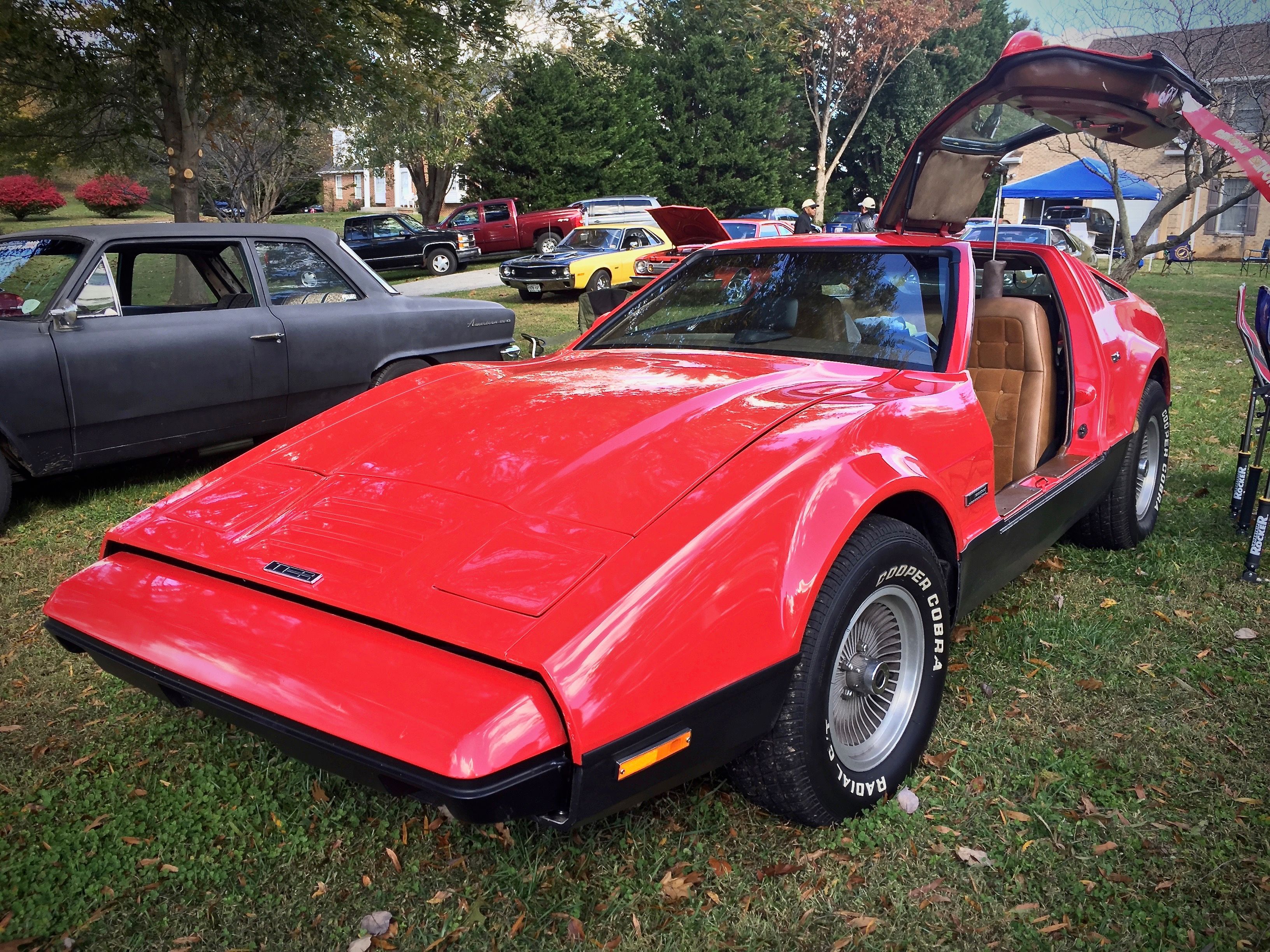
Bricklin SV-1 History
Bricklin's only car — a gull-winged, acrylic-bodied 'Safety Vehicle' built in New Brunswick from 1974 to 1976.
Photo: “1974 Bricklin 4 speed red at Potomac Ramblers meeting 1of7” by CZmarlin — Christopher Ziemnowicz — photo credit is required if this image is used anywhere other than Wikipedia. / Wikimedia Commons, licensed under CC BY-SA 4.0
History
The Bricklin SV-1 — the 'SV' standing for 'Safety Vehicle' — was the brainchild of American entrepreneur Malcolm Bricklin, who had earlier brought Subaru to the United States. Conceived as a safe yet sporty two-seater, it was built in Saint John, New Brunswick, Canada, with roughly C$4.5 million in financing from the provincial government under Premier Richard Hatfield. Its signature feature was a pair of powered gull-wing doors; each door weighed about 90 lb and was raised and lowered hydraulically, taking up to around 12 seconds to operate.
The car emphasized safety engineering: a steel perimeter frame with an integral roll cage, energy-absorbing 5-mph bumpers, and a body of color-impregnated acrylic resin bonded to fiberglass, offered in five 'safety' colors and requiring no separate paint. The 1974 cars used a 360-cubic-inch (5.9 L) AMC V8; for 1975 and the handful of 1976 cars the engine switched to Ford's 351-cubic-inch (5.8 L) Windsor V8. Notably, the SV-1 was offered with no cigarette lighter or ashtray, reflecting Bricklin's safety-minded pitch.
Production was plagued by quality, supply, and cost problems — the cars were reportedly sold below their cost to build. Only about 2,906 SV-1s were completed: roughly 772 in 1974, about 2,100 in 1975, and around 34 assembled from leftover parts in 1976. Bricklin Canada Ltd. was forced into receivership, with its final operating day on September 23, 1975, ending the marque after a single model. Surviving SV-1s have since become collectible curiosities of 1970s automotive history.
Generations
1974 model year · AMC 360 V8
Photo: “1974 Bricklin 4 speed red at Potomac Ramblers meeting 1of7” by CZmarlin — Christopher Ziemnowicz — photo credit is required if this image is used anywhere other than Wikipedia. / Wikimedia Commons, licensed under CC BY-SA 4.0
The debut cars, powered by a 360-cubic-inch (5.9 L) AMC V8; about 772 built.
1974 Photo: “1974 Bricklin 4 speed red at Potomac Ramblers meeting 1of7” by CZmarlin — Christopher Ziemnowicz — photo credit is required if this image is used anywhere other than Wikipedia. / Wikimedia Commons, licensed under CC BY-SA 4.0
1975–1976 model years · Ford 351 Windsor V8
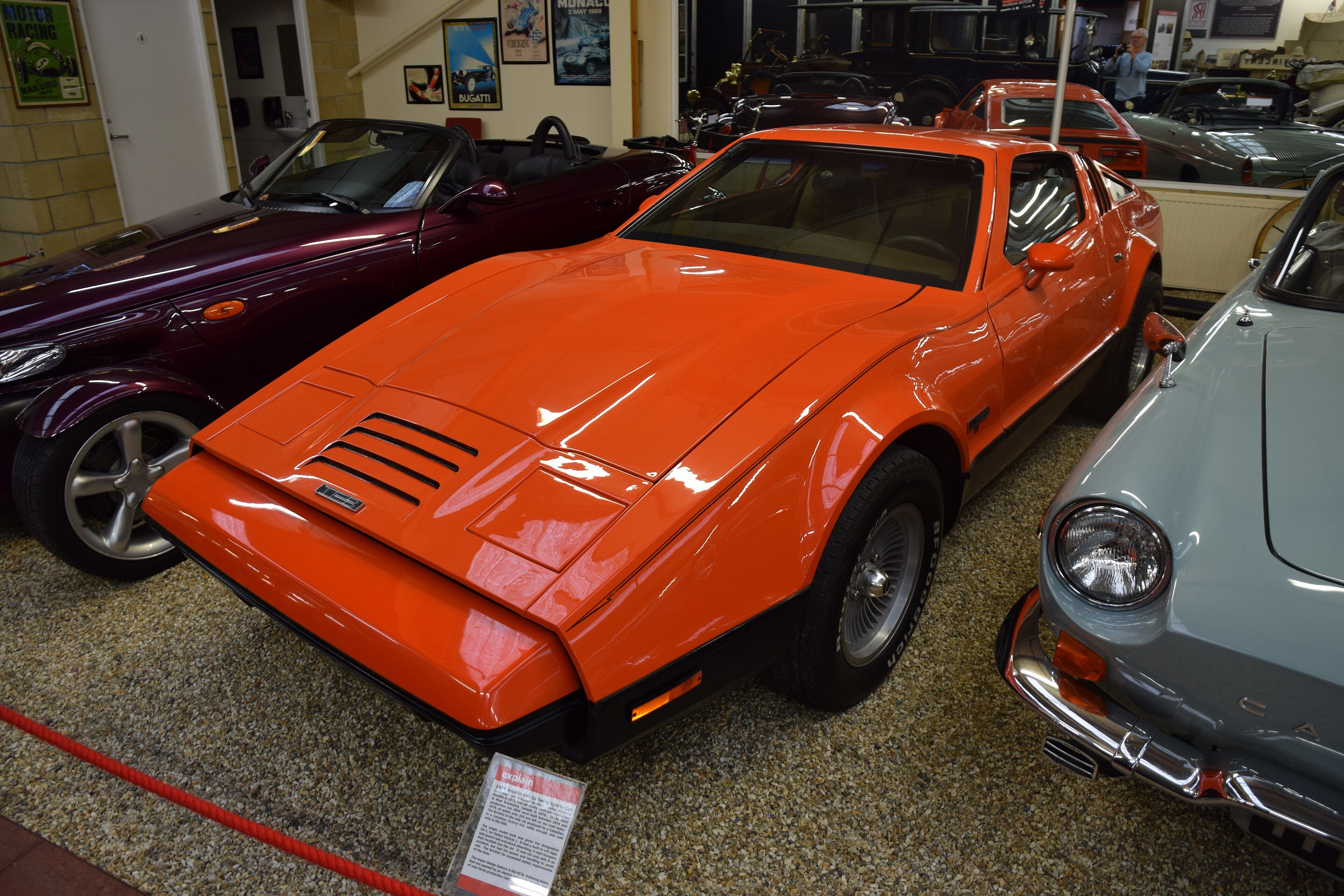
Photo: “1975 Bricklin SV1 Gullwing” by Hugh Llewelyn from Keynsham, UK / Wikimedia Commons, licensed under CC BY-SA 2.0
Switched to a 351-cubic-inch (5.8 L) Ford Windsor V8; about 2,100 built in 1975 and roughly 34 assembled from leftover parts in 1976 before receivership.
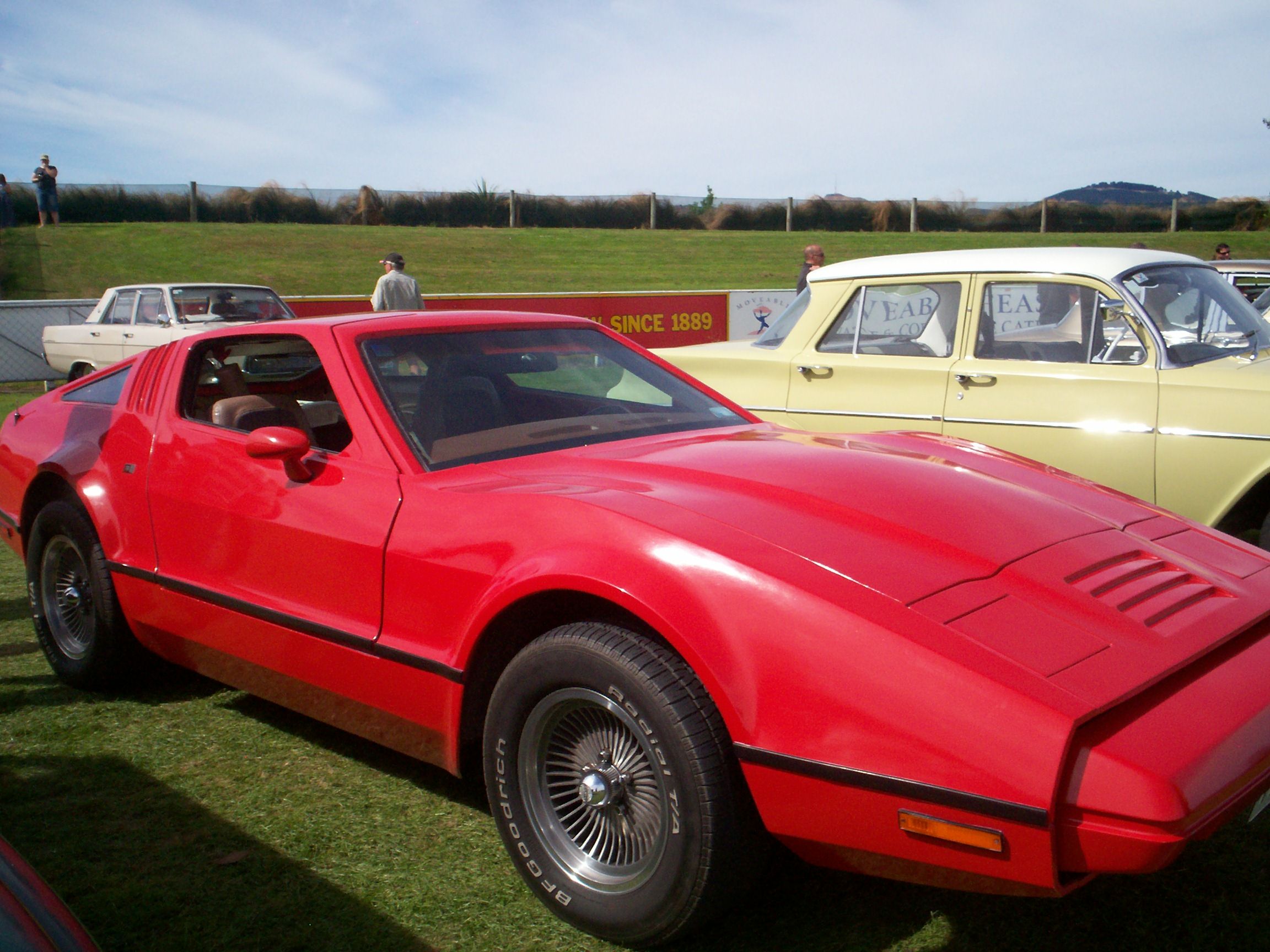
1975 Photo: “1975 Bricklin SV1” by Riley from Christchurch, New Zealand / Wikimedia Commons, licensed under CC BY 2.0
Body styles
- 2-door hatchback coupe (gull-wing doors)
Related models
Collect the nameplate
Find a scale model of the Bricklin SV-1
Search Amazon across available years, colors, and scales. Exact releases vary, so confirm the listing before ordering.