
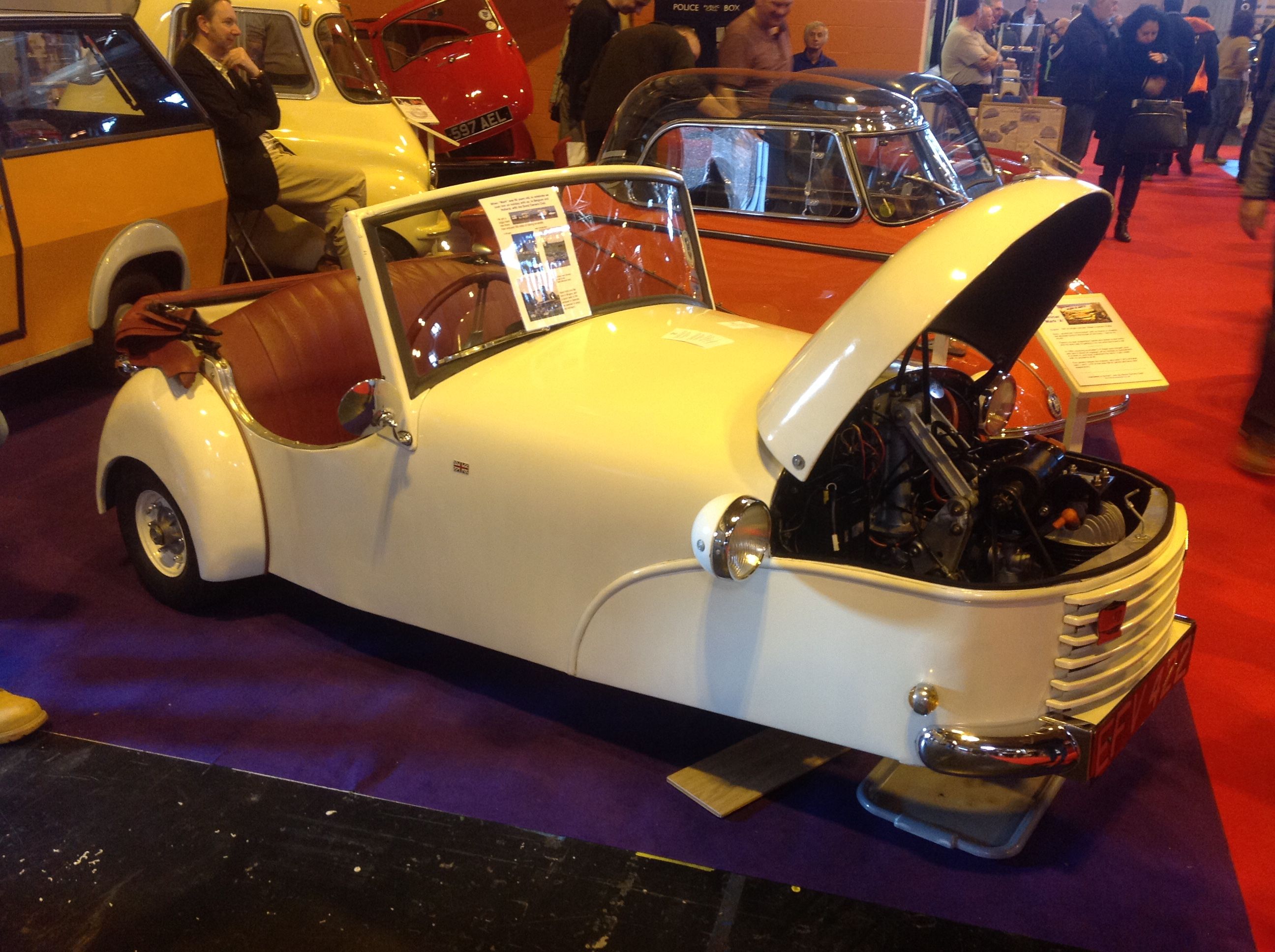
Bond Minicar History
Britain's best-known post-war economy three-wheeler — a Villiers-powered microcar that ran from Mark A through Mark G across 17 years.
Photo: “File:Bond Minicar Mark A (1951).jpg” by andreboeni / Wikimedia Commons, licensed under CC BY 2.0
History
The Bond Minicar began production in January 1949 at Sharp's Commercials Ltd in Preston, Lancashire, based on a prototype by engineer Lawrence 'Lawrie' Bond. The Mark A used a 122 cc single-cylinder Villiers two-stroke engine — upgraded within the first year to 197 cc — with aluminium bodywork, no doors, and a single driven front wheel that also steered; it had no reverse gear (the car was light enough to manhandle). Some 1,973 Mark A units were built before the Mark B arrived in 1951.
Seven distinct Marks followed over the next 15 years, each progressively more refined. The Mark C (1952–1956, 6,399 built) added a longer, more streamlined body; the Mark E (1956–1958) introduced full-height doors and a semi-monocoque structure; and the Mark F (1958–1963, 6,493 built) saw the engine grow to 247 cc. The final Mark G (1961–1966, 3,253 built) offered single- or twin-cylinder Villiers power in saloon, convertible, estate, and van forms — the broadest body range the Minicar ever offered.
The Minicar's appeal rested on its rock-bottom running costs and the tax advantage that, until 1962, three-wheelers carried over conventional cars. When the UK government equalised purchase tax between three- and four-wheelers that year, the Minicar's financial rationale evaporated and sales fell sharply. Production ceased with the Mark G in December 1966, ending a line of roughly 24,500 cars built in total.
Generations
Mark A / B · Original Minicar
Photo: “File:Bond Minicar Mark A (1951).jpg” by andreboeni / Wikimedia Commons, licensed under CC BY 2.0
Doorless aluminium-bodied three-wheeler with a 122–197 cc Villiers engine; 1,973 Mark A and 1,414 Mark B units built.
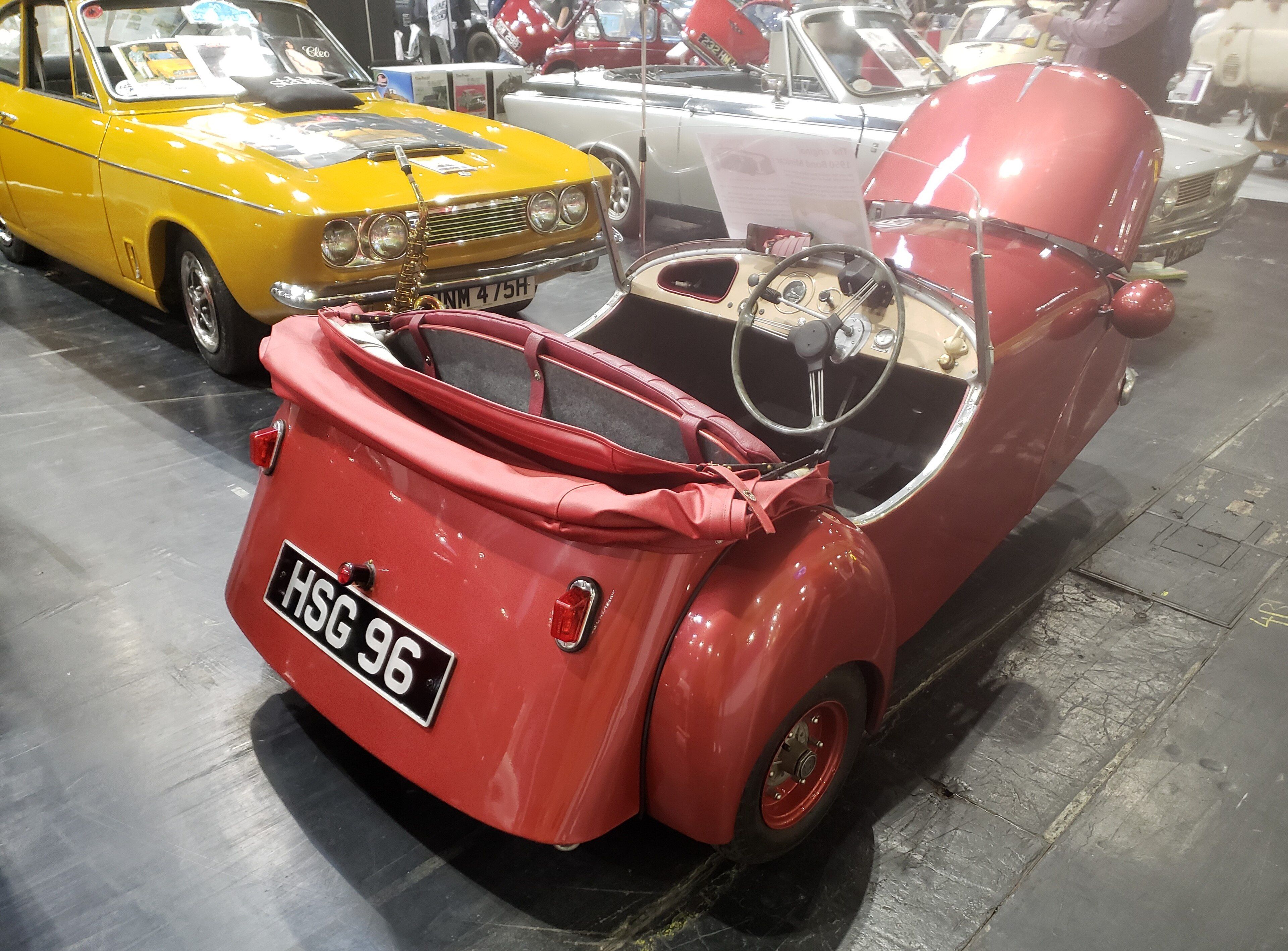
1950 Photo: “File:Bond Minicar (1950) (53338221231).jpg” by Andrew Bone from Weymouth, England / Wikimedia Commons, licensed under CC BY 2.0
1951 Photo: “File:Bond Minicar Mark A (1951).jpg” by andreboeni / Wikimedia Commons, licensed under CC BY 2.0
Mark C / D · Streamlined Minicar
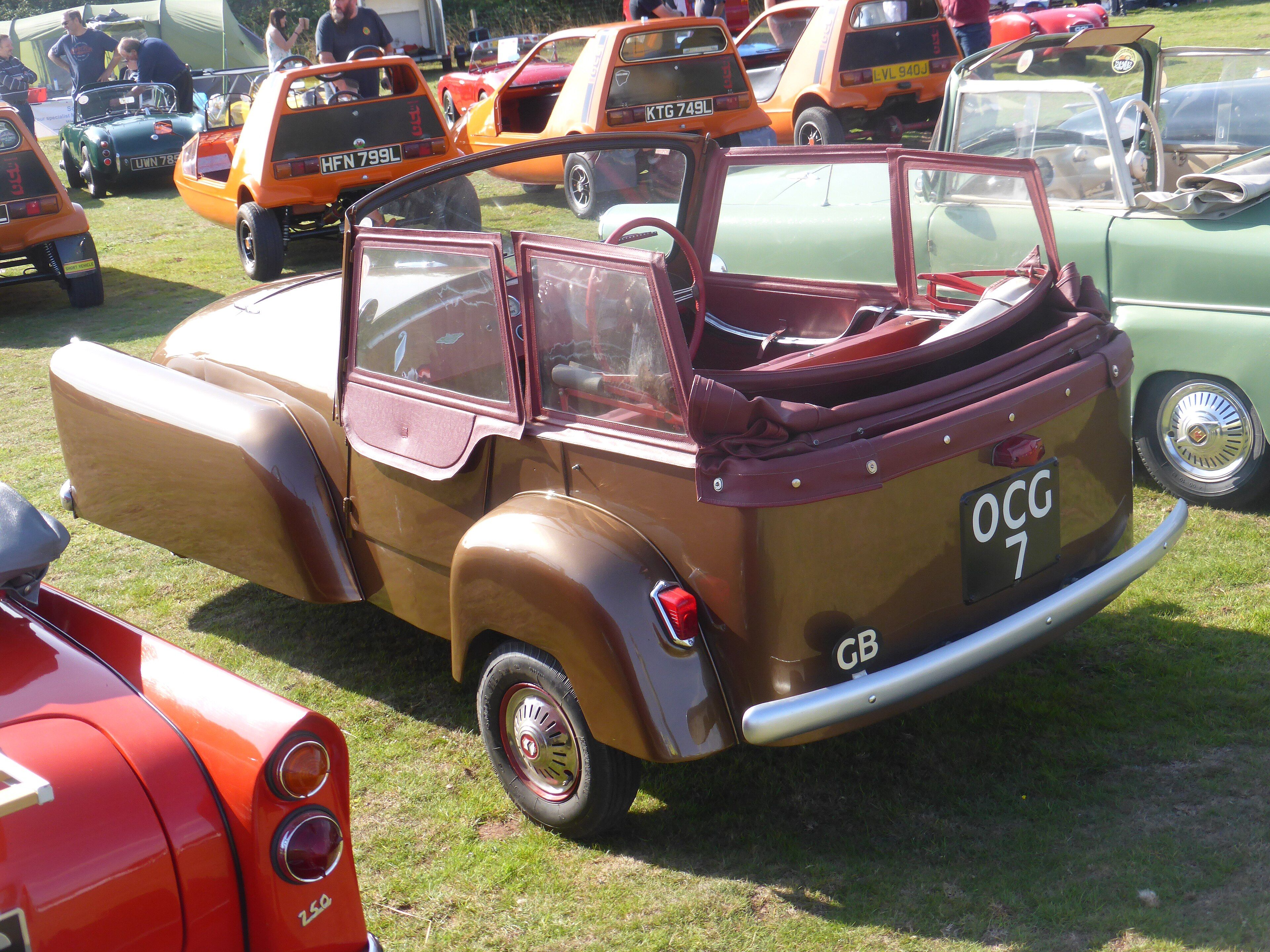
Photo: “File:Bond Minicar Mark C (1955) (48798102901).jpg” by Andrew Bone from Weymouth, England / Wikimedia Commons, licensed under CC BY 2.0
Longer, more streamlined body; Mark C was the volume leader with 6,399 units; Mark D added 12-volt electrics and an optional Dynastart reverse.
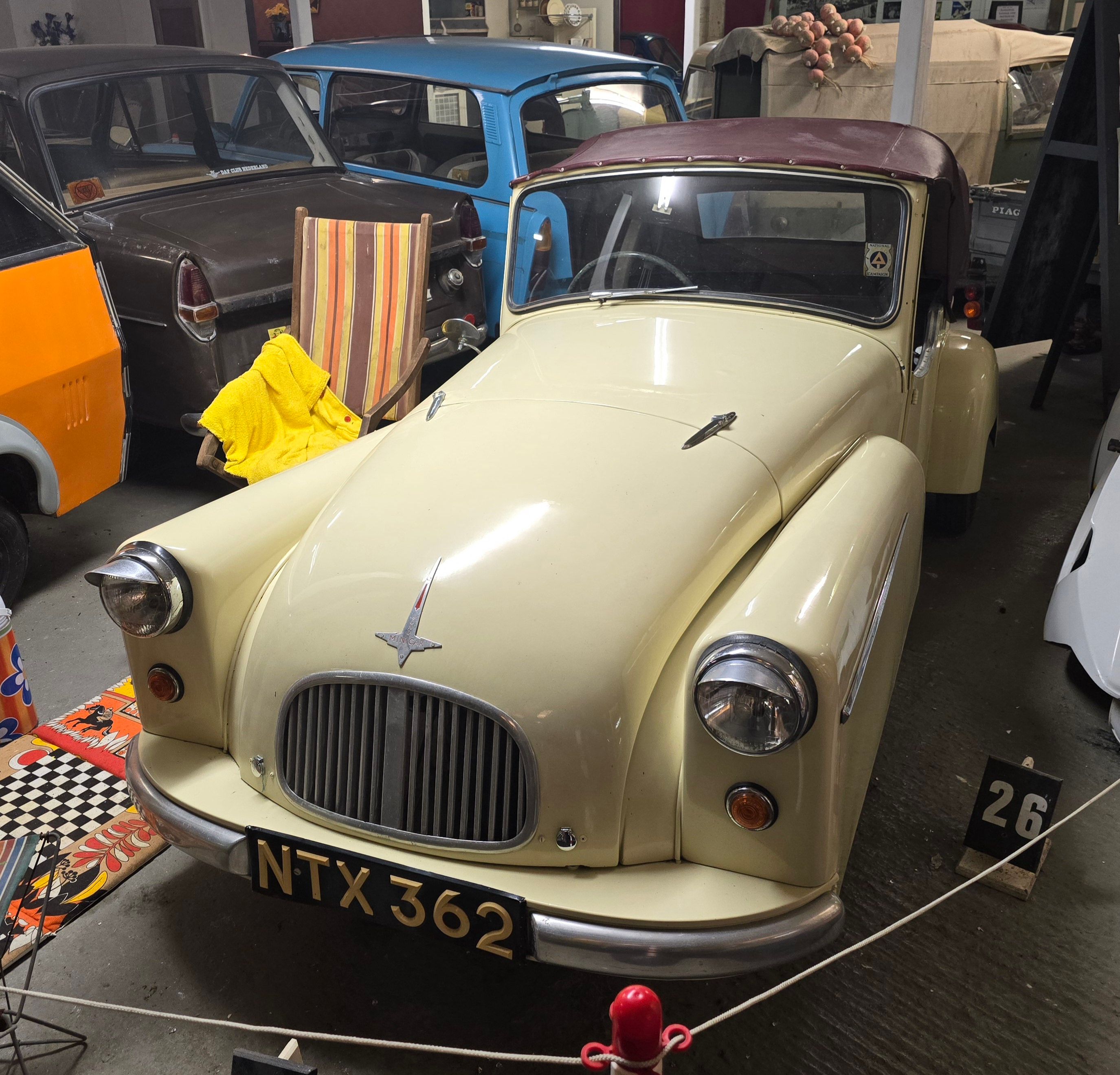
1953 Photo: “File:1953 Bond Minicar Mark C.jpg” by Calreyn88 / Wikimedia Commons, licensed under CC BY-SA 4.0
1955 Photo: “File:Bond Minicar Mark C (1955) (48798102901).jpg” by Andrew Bone from Weymouth, England / Wikimedia Commons, licensed under CC BY 2.0
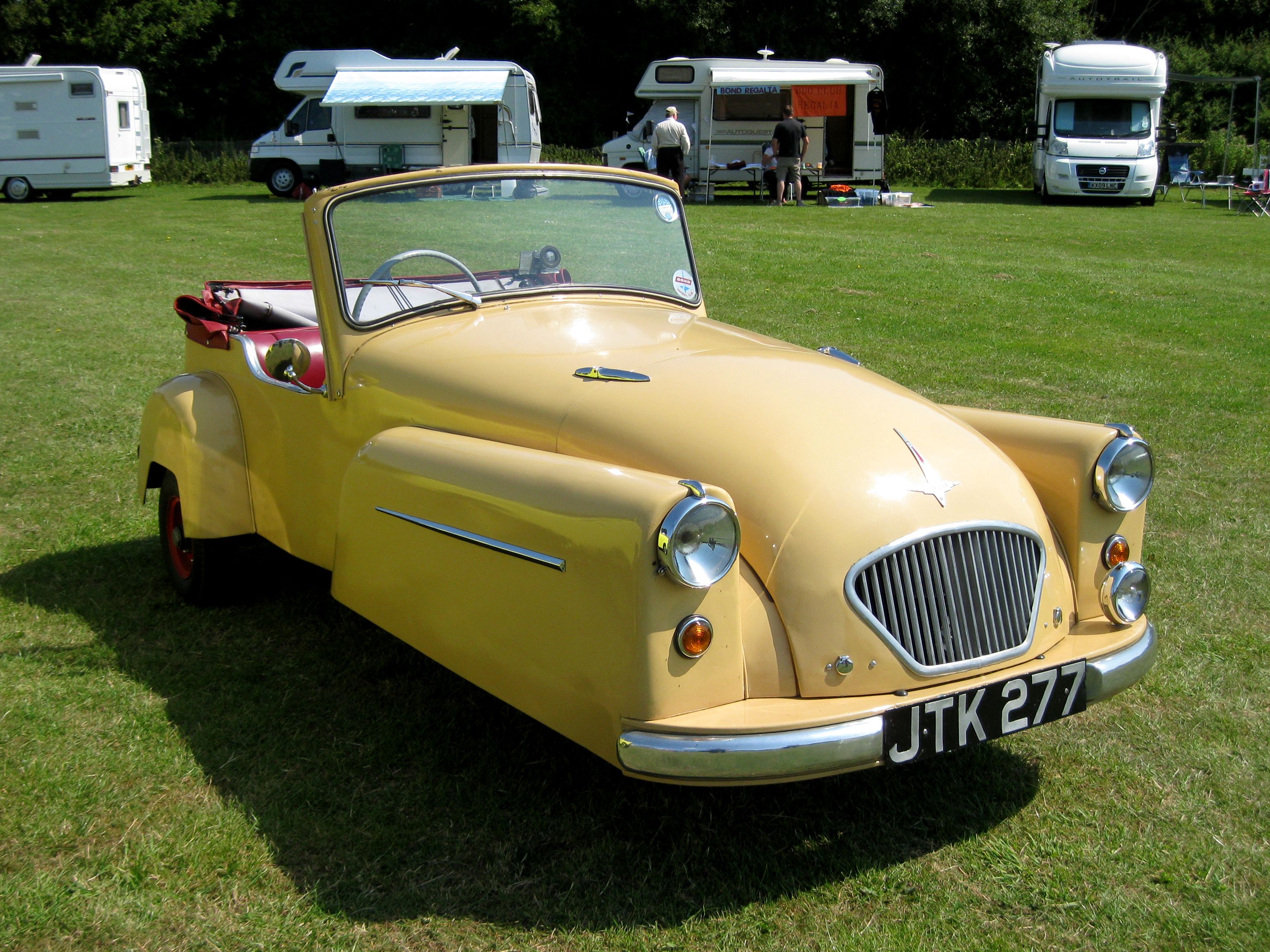
1956 Photo: “File:1956 Bond Minicar Mark C De Luxe Tourer.jpg” by Mighty Antar / Wikimedia Commons, licensed under CC BY-SA 3.0
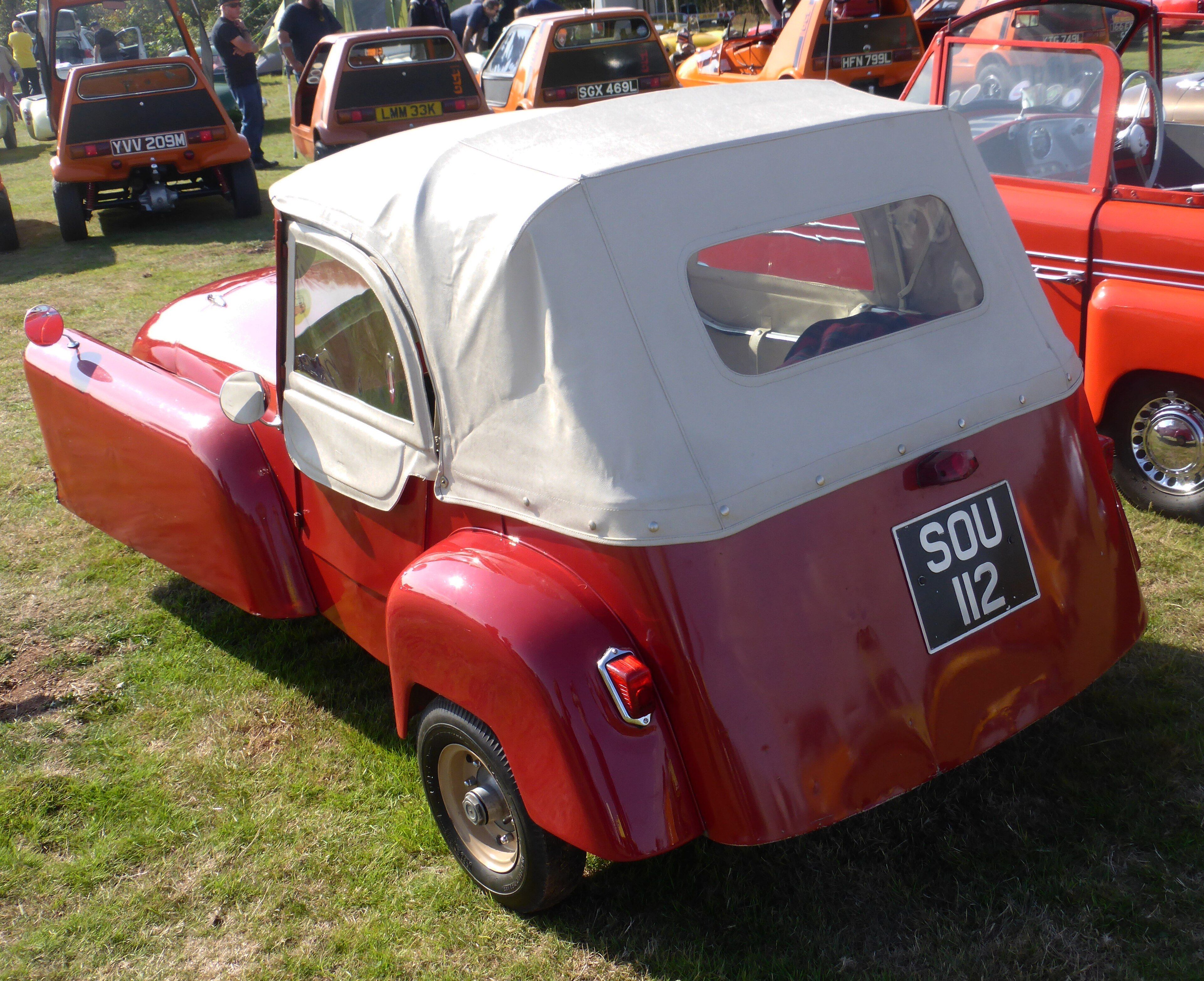
1957 Photo: “File:Bond Minicar Mark D (1957) (48780155856).jpg” by Andrew Bone from Weymouth, England / Wikimedia Commons, licensed under CC BY 2.0
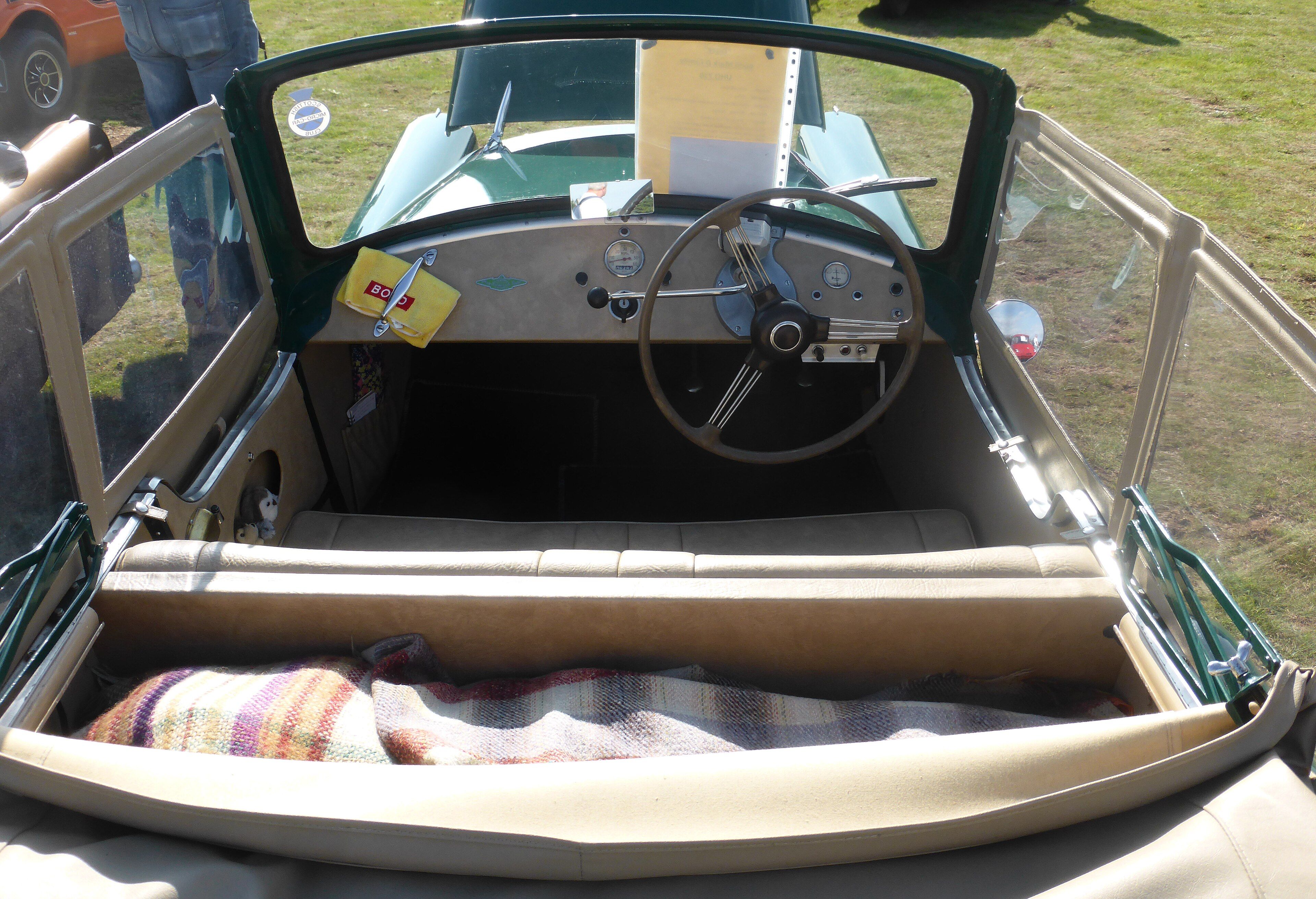
1958 Photo: “File:Bond Minicar Mark D (1958) (48798243657).jpg” by Andrew Bone from Weymouth, England / Wikimedia Commons, licensed under CC BY 2.0
Mark E / F · Full-door Minicar
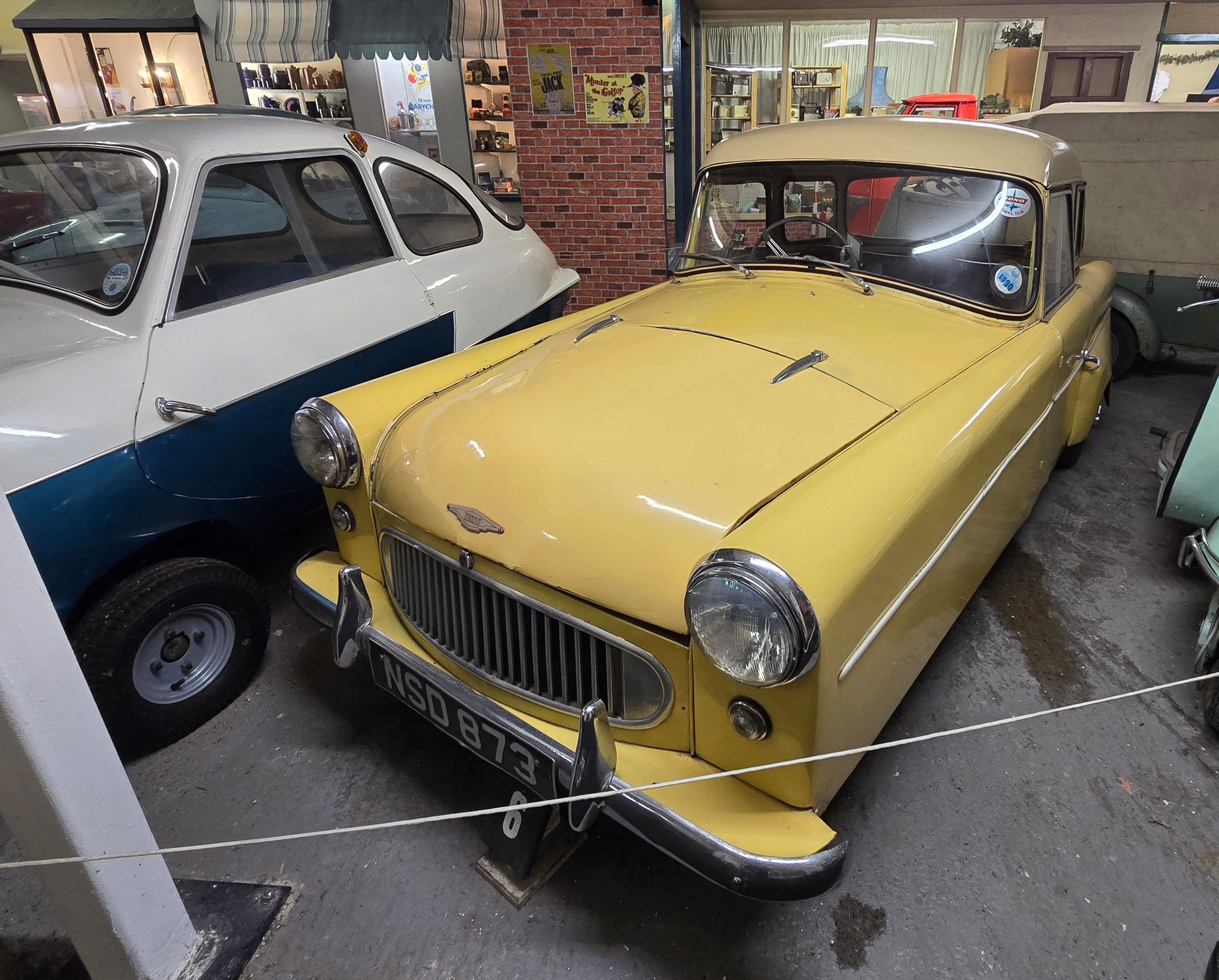
Photo: “File:Bond Minicar Mark F.jpg” by Calreyn88 / Wikimedia Commons, licensed under CC BY-SA 4.0
Mark E brought full-height doors and semi-monocoque construction; Mark F grew the engine to 247 cc and added coupé and van body options (6,493 built).
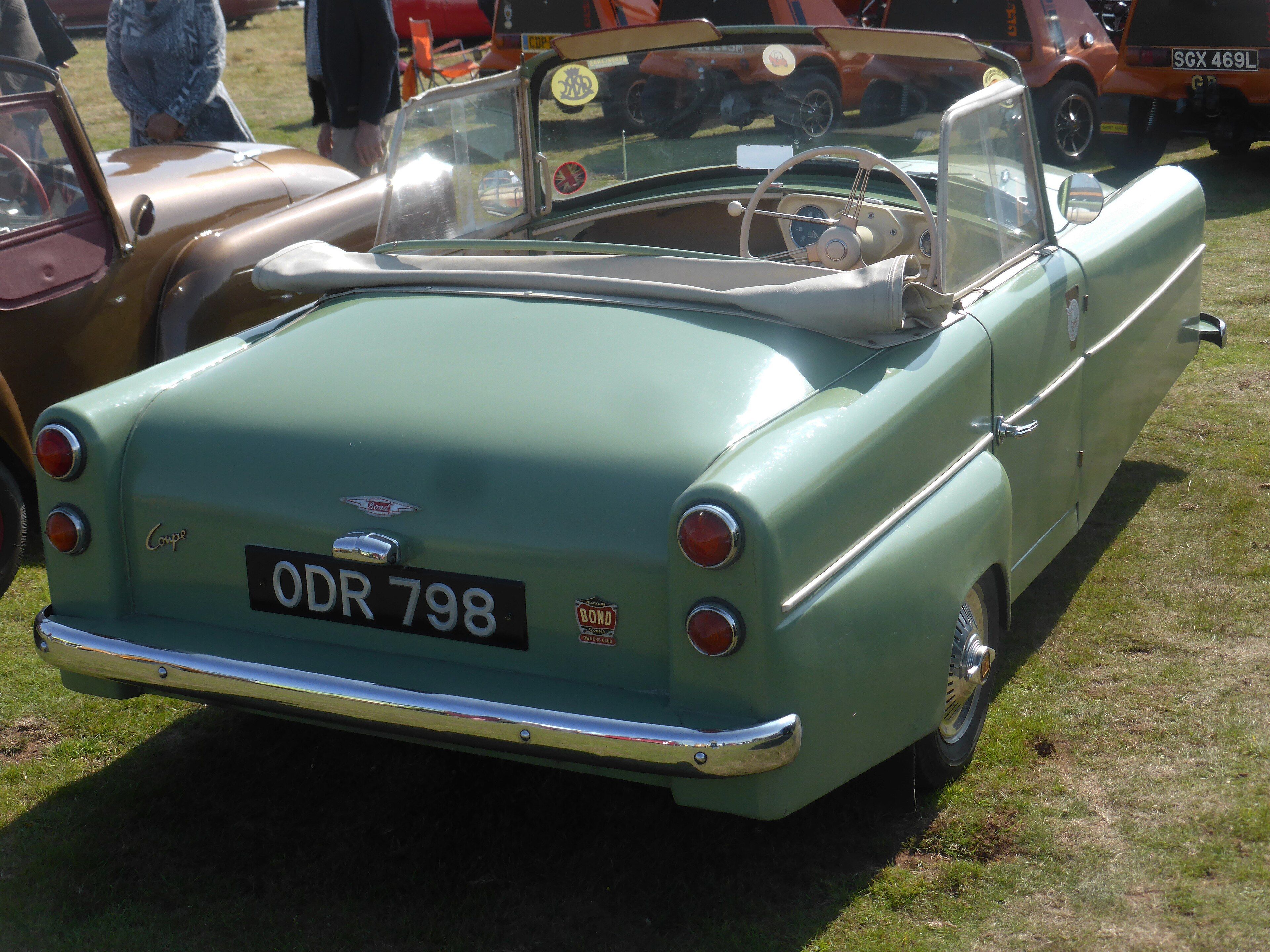
1958 Photo: “File:Bond Minicar Mark E Coupe (1958) (48768481113).jpg” by Andrew Bone from Weymouth, England / Wikimedia Commons, licensed under CC BY 2.0
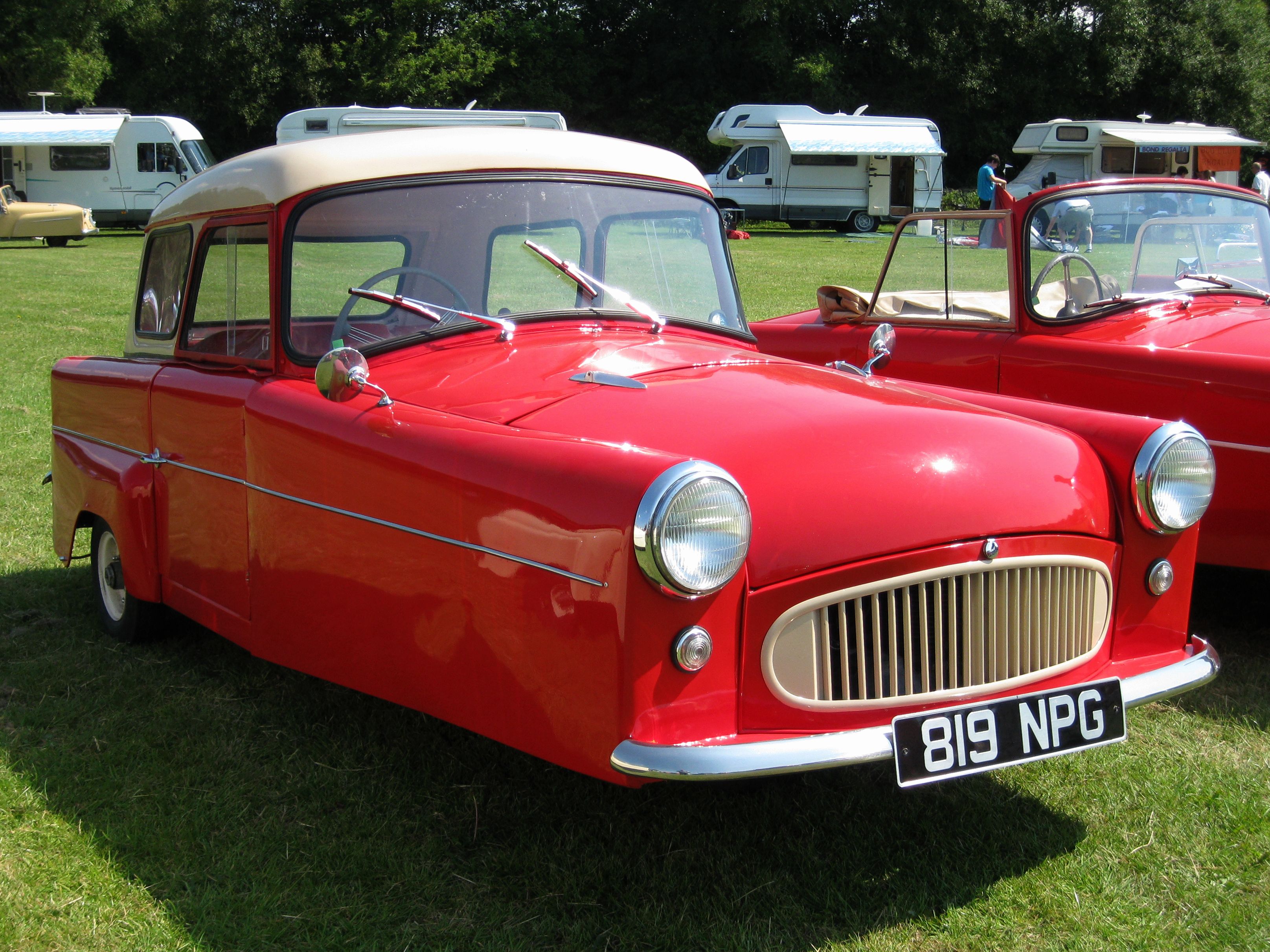
1960 Photo: “File:1960 Bond Minicar Mark F Family Saloon.jpg” by Mighty Antar / Wikimedia Commons, licensed under CC BY-SA 3.0
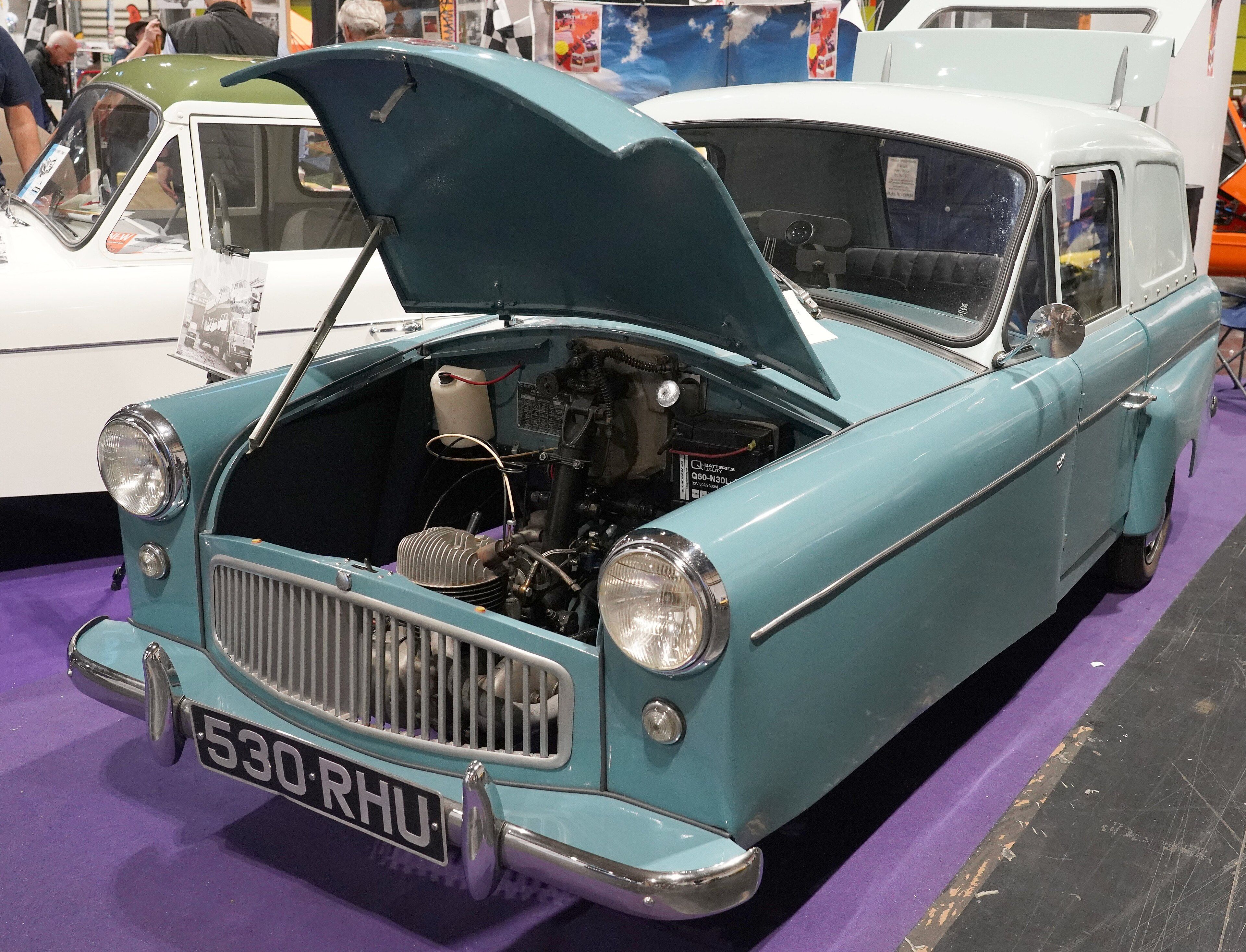
1962 Photo: “File:530RHU 1962 Bond Minicar.jpg” by kitmasterbloke / Wikimedia Commons, licensed under CC BY 4.0
Mark G · Final Minicar
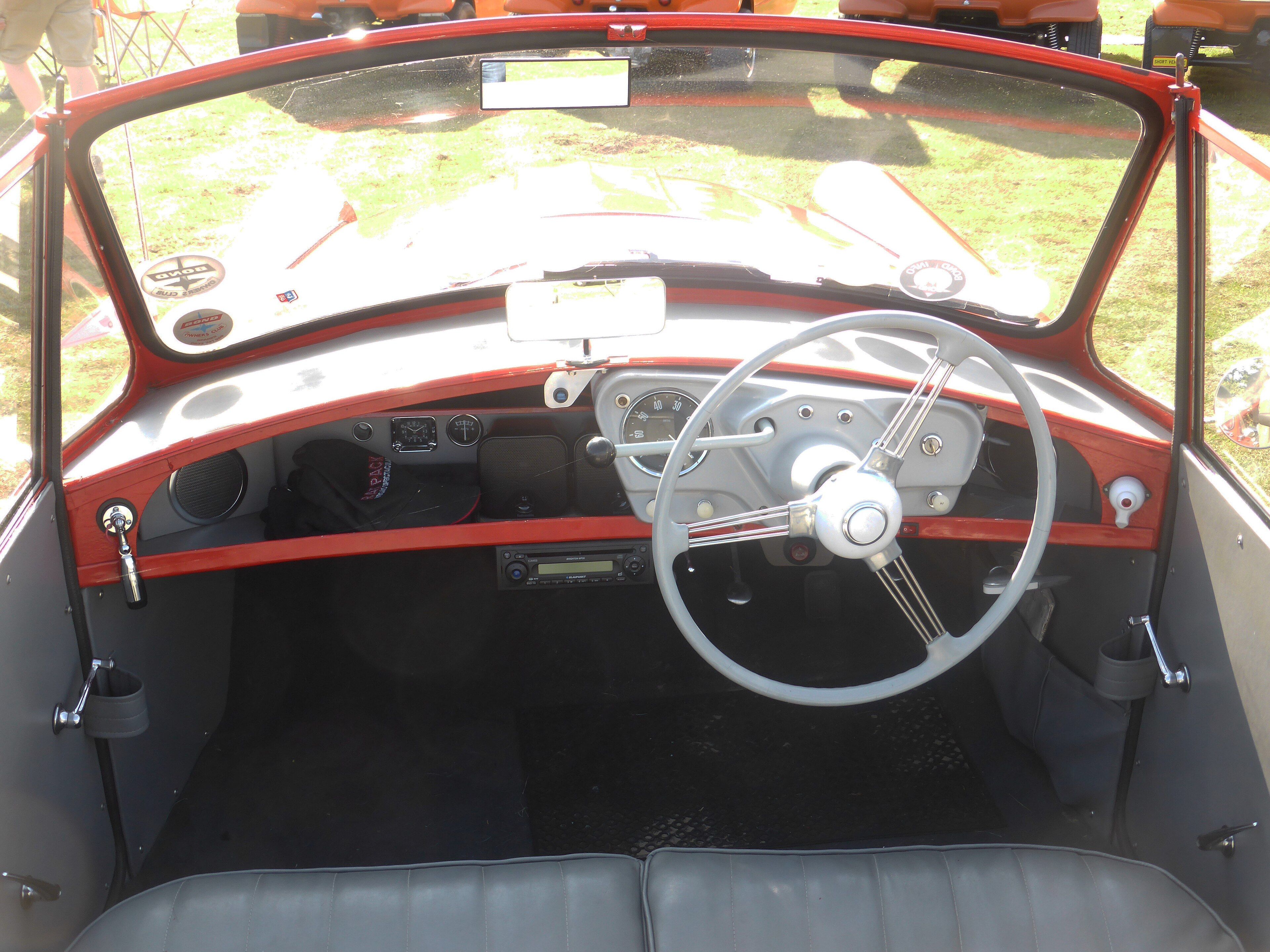
Photo: “File:Bond Minicar Mark G (1965) (48791626173).jpg” by Andrew Bone from Weymouth, England / Wikimedia Commons, licensed under CC BY 2.0
The most refined Minicar, available with single- or twin-cylinder Villiers power in saloon, convertible, estate, and van forms; 3,253 built before the line ended.
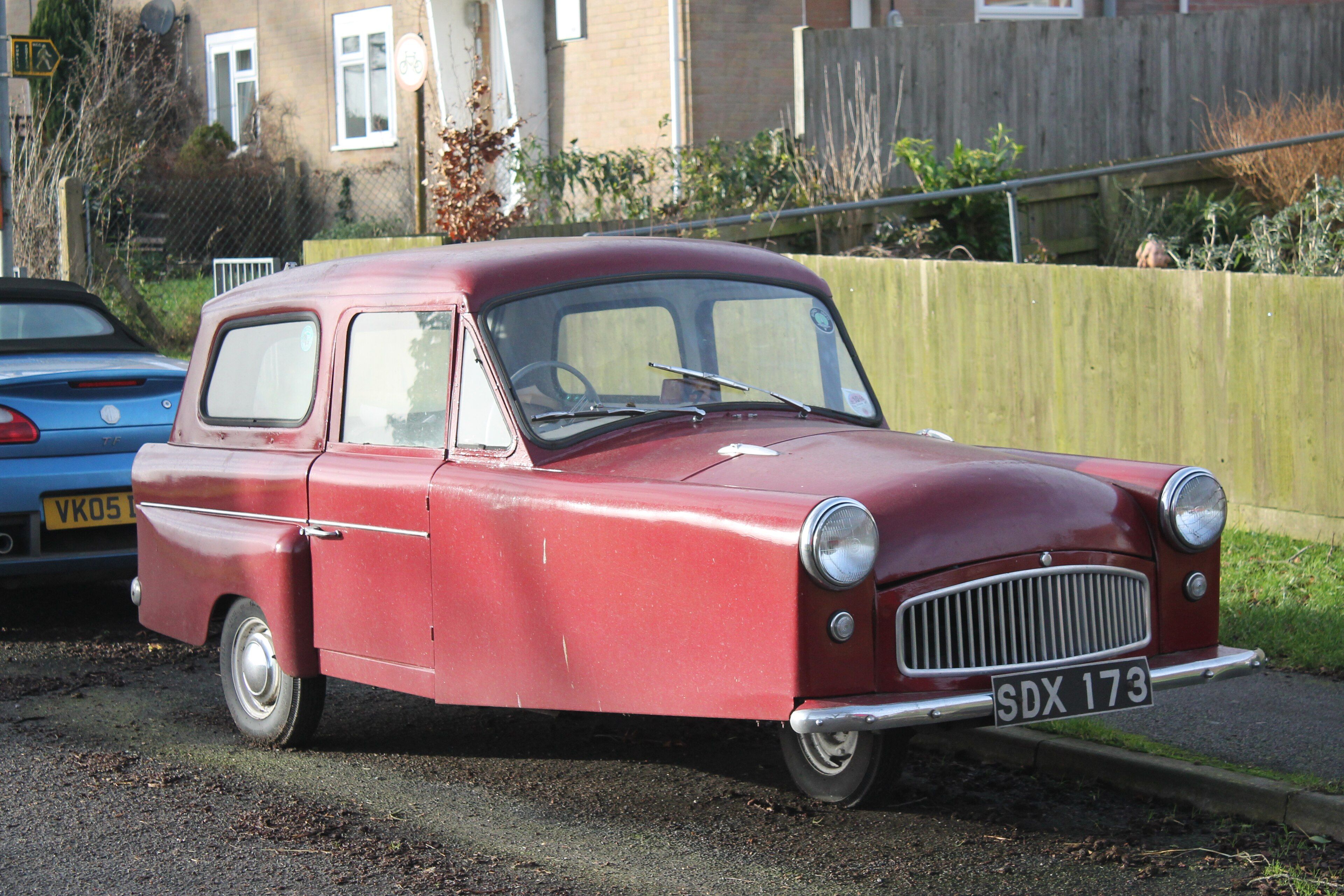
1963 Photo: “File:1963 Bond 250G (16372612291).jpg” by Charlie from United Kingdom / Wikimedia Commons, licensed under CC BY 2.0
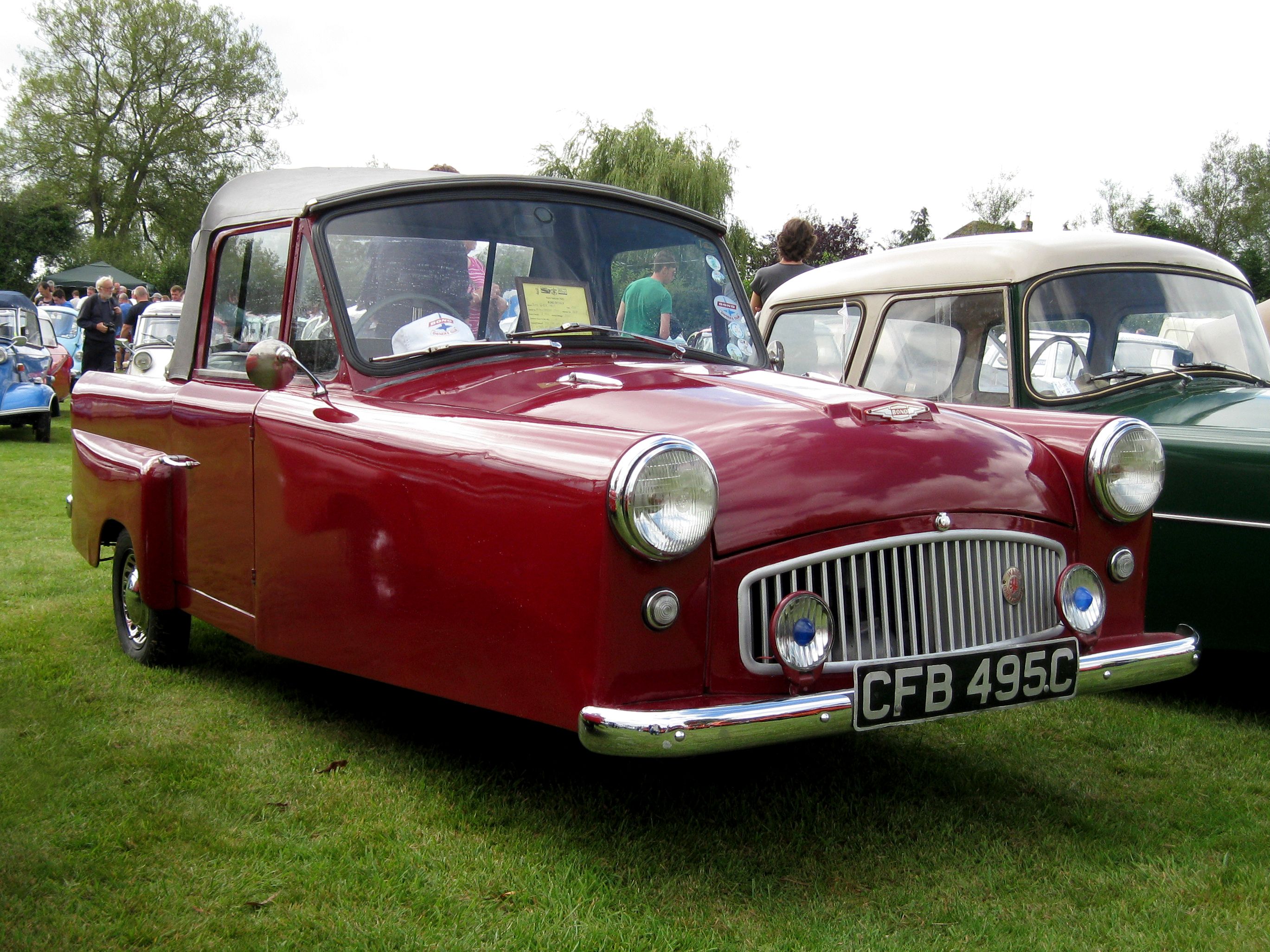
1964 Photo: “File:1964 Bond Minicar Mark G Tourer.jpg” by Mighty Antar / Wikimedia Commons, licensed under CC BY-SA 3.0
1965 Photo: “File:Bond Minicar Mark G (1965) (48791626173).jpg” by Andrew Bone from Weymouth, England / Wikimedia Commons, licensed under CC BY 2.0
Body styles
- Tourer / convertible
- Coupé
- Saloon
- Estate
- Van
Related models
Collect the nameplate
Find a scale model of the Bond Minicar
Search Amazon across available years, colors, and scales. Exact releases vary, so confirm the listing before ordering.