
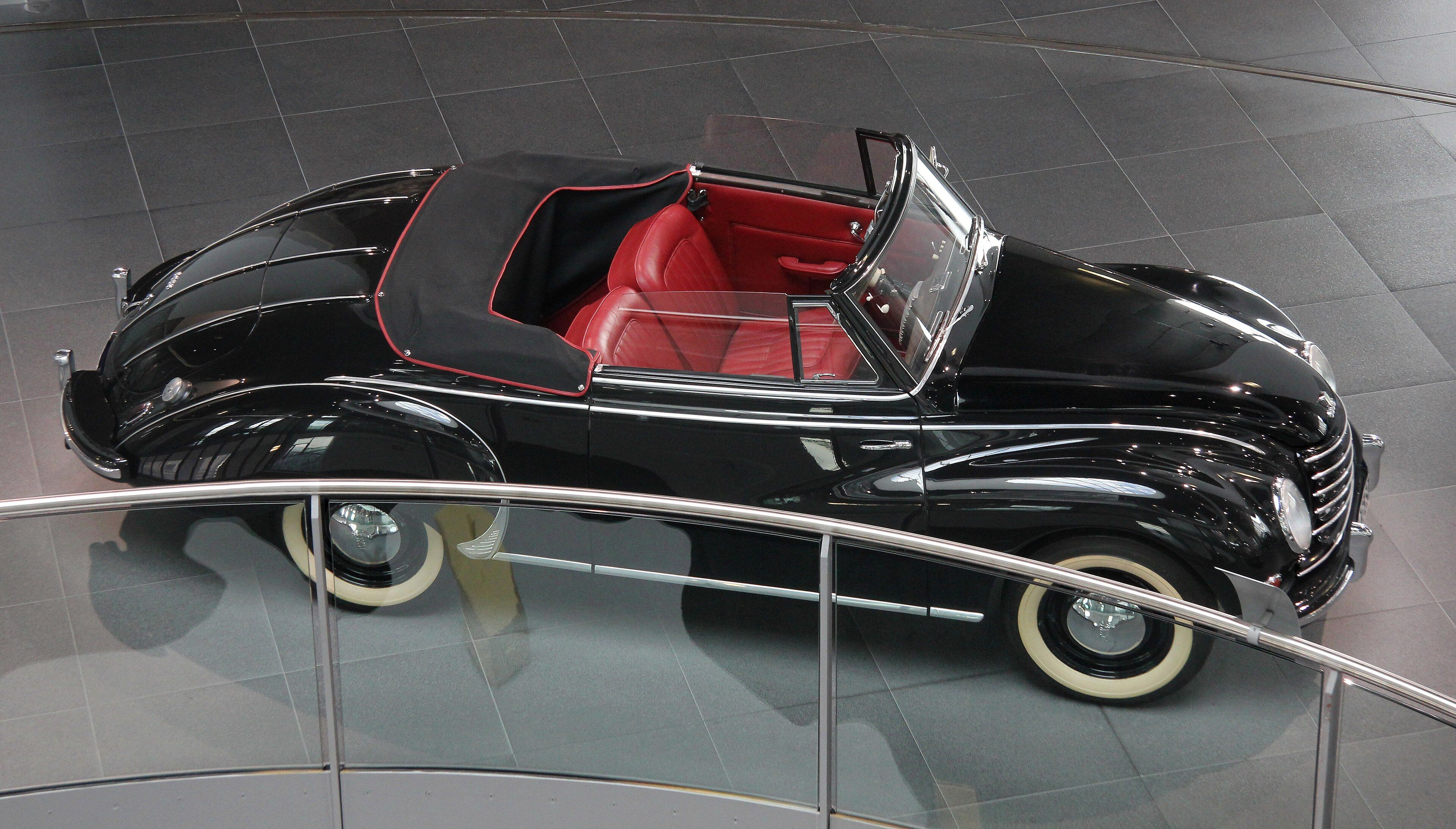
Auto Union DKW 3=6 (Sonderklasse) History
Auto Union's post-war comeback compact — a front-wheel-drive, two-stroke three-cylinder that the '3=6' name claimed equalled a six-cylinder four-stroke.
Photo: “DKW F91 Cabrio, Bj. 1953, re. Seite.JPG” by Lothar Spurzem / Wikimedia Commons, licensed under CC BY-SA 2.0 de
History
Premiered at the Frankfurt Motor Show in March 1953, the DKW 3=6 (factory designation F91, later F93 and F94) was the revived Auto Union's first all-new post-war passenger car. The marketing name '3=6' asserted that the 896 cc three-cylinder two-stroke engine was the performance equivalent of a six-cylinder four-stroke — a bold claim that reflected DKW's faith in its two-stroke heritage and front-wheel-drive layout.
The F93 variant introduced for the 1956 model year raised output to 38 bhp, with a further increase to 40 bhp by 1957. A pillarless coupe appeared from 1954, and Karmann of Osnabrück built a cabriolet version. A Saxomat automatic centrifugal clutch became available in 1956, making the 3=6 one of the more technologically progressive German economy cars of its era.
Production continued until 1959, overlapping briefly with its successor the Auto Union 1000, giving Auto Union time to ramp up the new model. The 3=6 established the front-wheel-drive two-stroke formula that all subsequent DKW/Auto Union road cars would follow through the 1960s.
Generations
First series · F91
Photo: “DKW F91 Cabrio, Bj. 1953, re. Seite.JPG” by Lothar Spurzem / Wikimedia Commons, licensed under CC BY-SA 2.0 de
Original 896 cc, 34 bhp; launched at Frankfurt Motor Show March 1953 as Auto Union's post-war comeback compact.
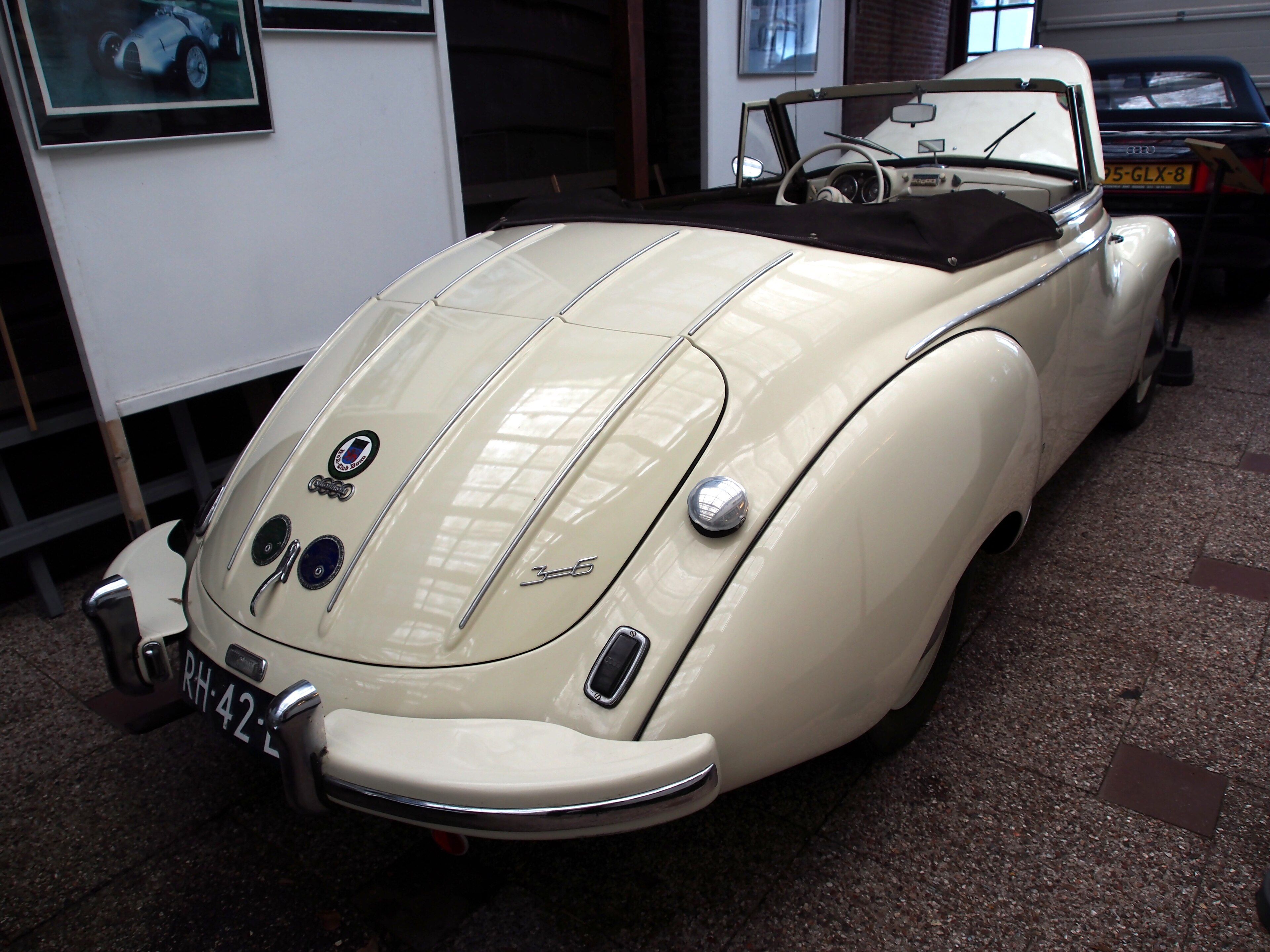
1954 Photo: “1954 DKW F 91 Sonderklasse Cabriolet Karmann, pic01.JPG” by Alf van Beem / Wikimedia Commons — CC0 1.0
Second series · F93/F94
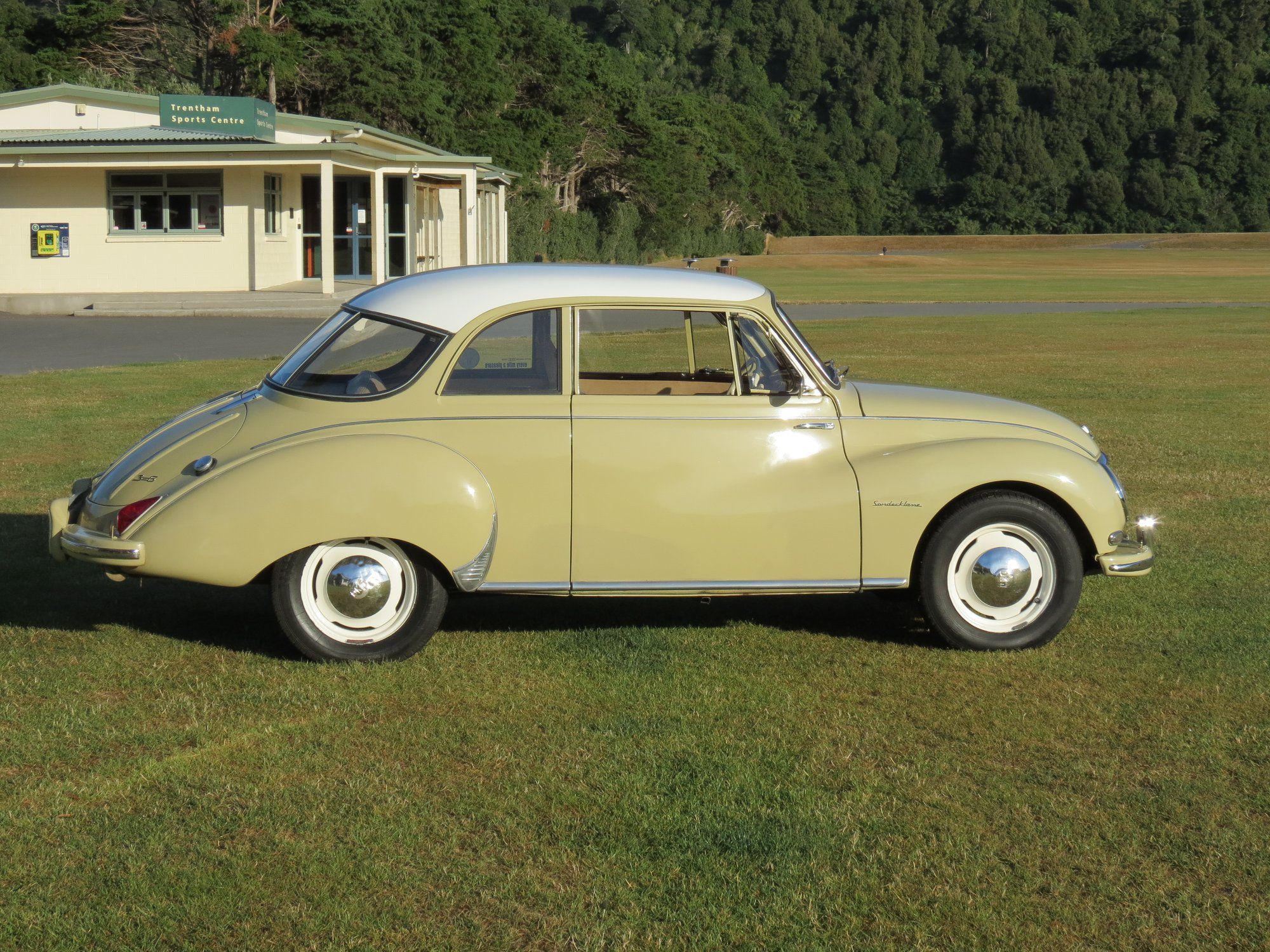
Photo: “1957 DKW 3=6 Sonderklasse.jpg” by Brendan Odell / Wikimedia Commons, licensed under CC BY-SA 4.0
Uprated to 38–40 bhp; four-speed gearbox standard and Saxomat clutch option introduced; sold alongside the new Auto Union 1000 through end of 1959.
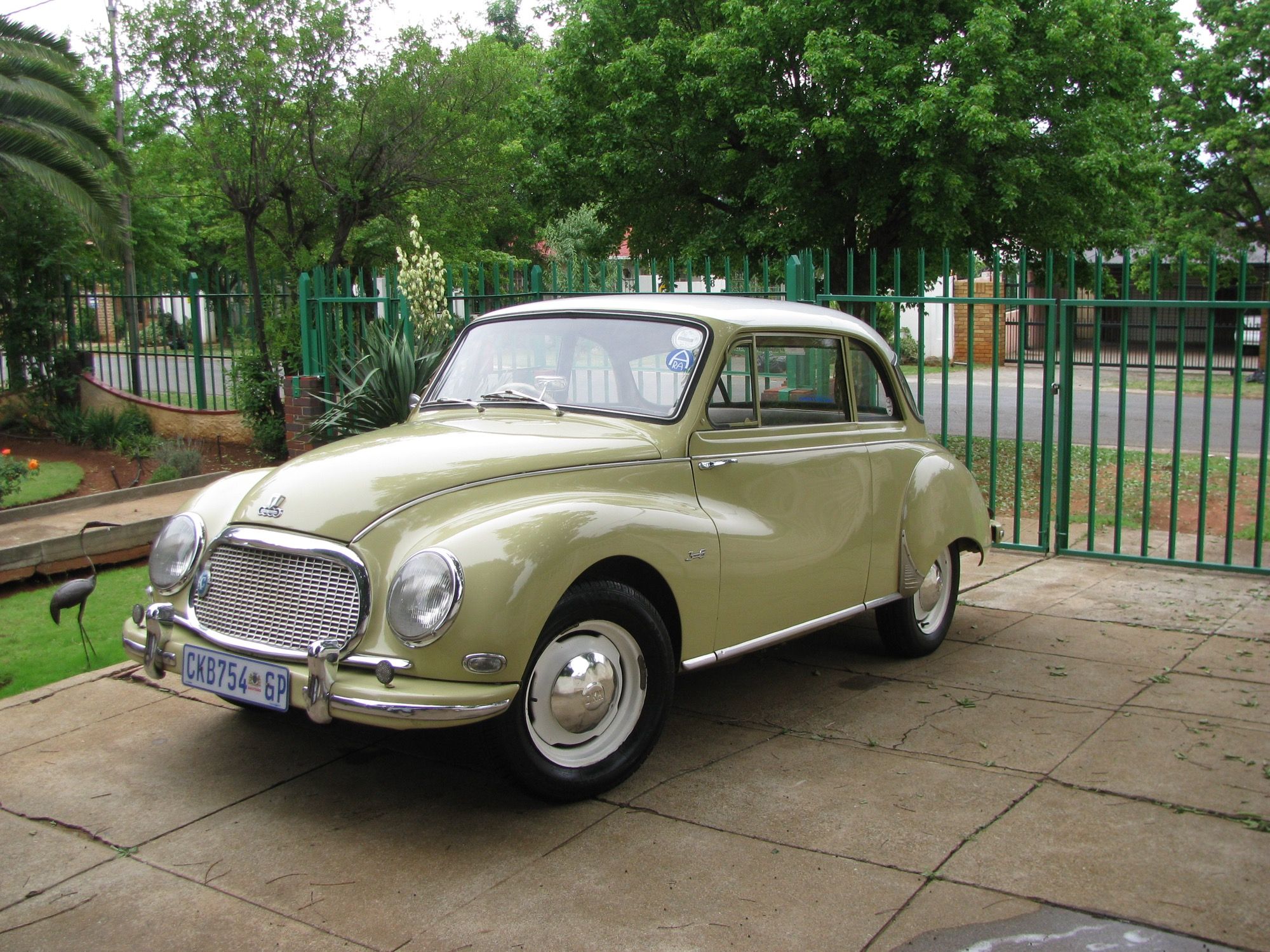
1957 Photo: “DKW F93 1957.jpg” by Brendan Odell / Wikimedia Commons — CC0 1.0
Body styles
- Sedan
- Coupe
- Cabriolet
- Estate (Universal)
Related models
Collect the nameplate
Find a scale model of the Auto Union DKW 3=6 (Sonderklasse)
Search Amazon across available years, colors, and scales. Exact releases vary, so confirm the listing before ordering.