
ARO 10 Series History
Catalog record
Photography for this nameplate has not yet cleared the archive’s licensing and identity checks. The researched text below remains available while the page stays out of search and advertising inventory.
History
The ARO 10 was unveiled at the Romanian Exhibition of National Economy (EREN) in 1979 and went on sale as a 1980 model. Designed by an independent car designer hired by the ARO factory, it was conceived as a light-utility compact 4x4 for both domestic use and export. The vehicle shared its engine and front axle with the Dacia 1300 (itself a licensed Renault 12), and its overall concept was reportedly inspired by the Renault Rodeo and Citroën Méhari — giving it a lighter, more accessible character than the larger 24 Series.
The ARO 10's early design featured independent suspension at all four corners, though the rear was later changed to a live axle for greater durability under load. The model range expanded to include seven engine options over its lifespan — petrol units from 1.3 to 1.6 litres (54–106 hp, including Volkswagen and Daewoo variants) and diesels from 1.6 to 2.0 litres (Peugeot and Renault sourced, 64–92 hp). Body styles spanned the 10.1 two-door convertible, the 10.4 three-door hard-top, the 11.4 five-door, and both single- and double-cab pick-up variants. A later Spartana variant (1997–2006) offered a stripped-down convertible for the leisure market.
In the United Kingdom the ARO 10 was marketed as the Dacia Duster — a name that would resurface decades later on a completely unrelated Renault-platform crossover from the reconstituted Dacia brand. The ARO 10 was also sold under the ARO Ischia and ARO Enduro x4 names in Italy. Production of both the ARO 10 and ARO 24 continued until the company's bankruptcy in June 2006, making the ARO 10 one of the longest-lived compact 4x4 designs of the communist-era Eastern European automotive industry.
Generations
First generation · Original ARO 10
Dacia 1300-based compact 4x4 with early all-independent suspension (later replaced by live rear axle); 1.3–1.6-litre petrol and diesel engines; convertible, hard-top, and pick-up variants.
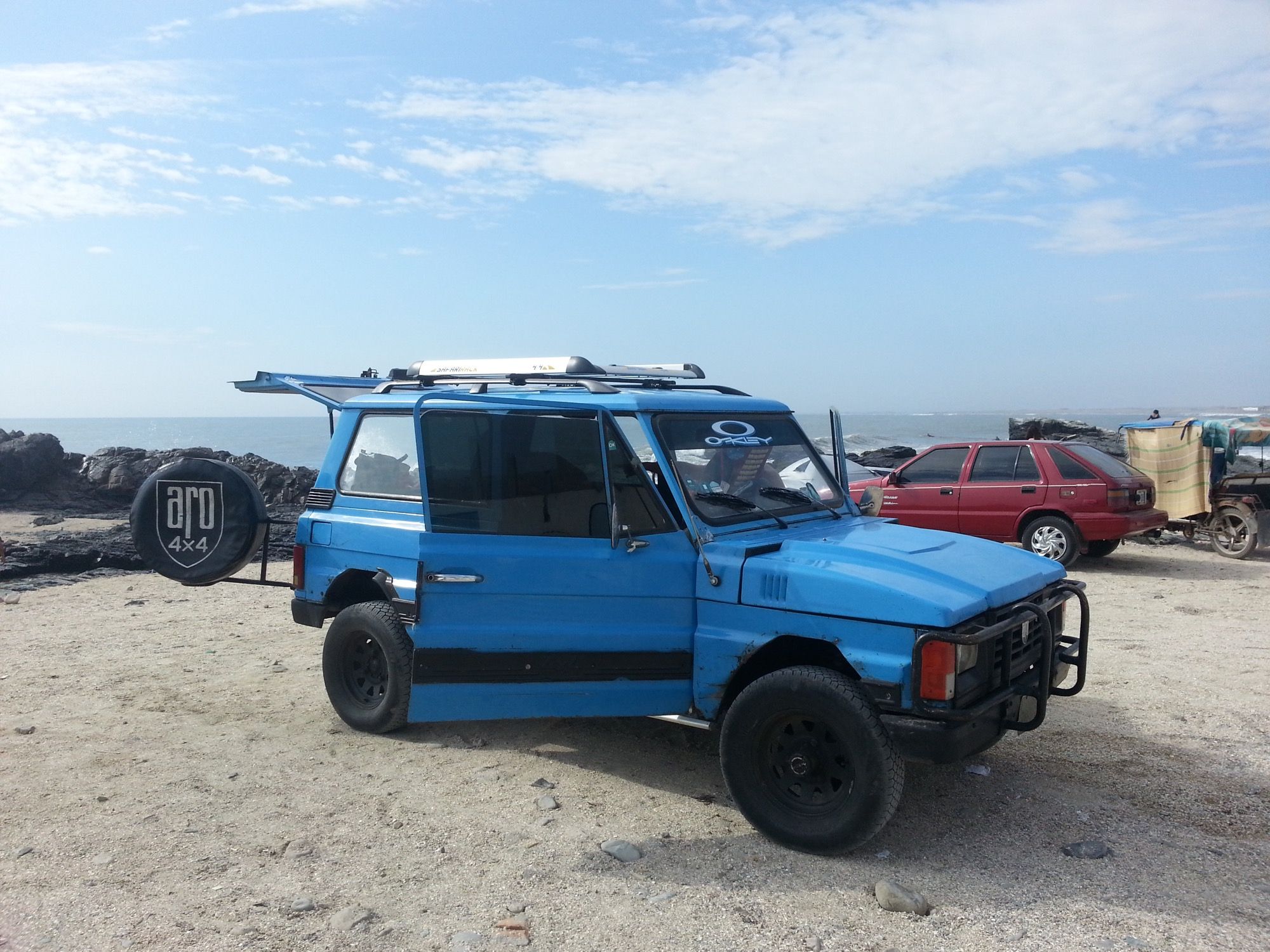
1988 Photo: “Aro 10.4 4x4 1988” by Renzount / Wikimedia Commons, licensed under CC BY-SA 4.0
Second generation · ARO 10 / Spartana facelift
Revised lineup including the Spartana 2-door convertible; VW and Daewoo petrol engines alongside Peugeot/Renault diesels; production ran to ARO's 2006 bankruptcy.
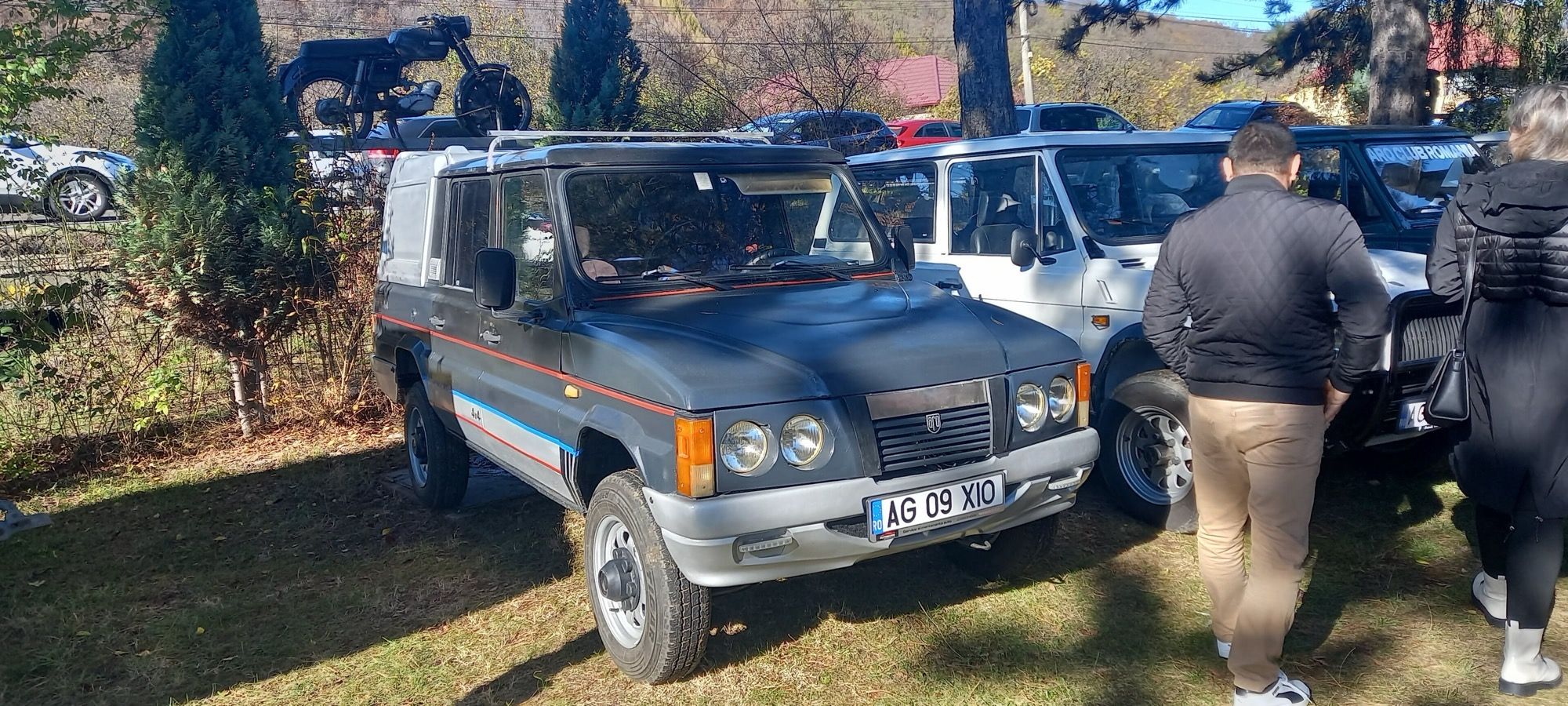
1999 Photo: “ARO 11.9 (1999-2006)” by ROCostiTheBunnyCZ / Wikimedia Commons — CC0 1.0
Body styles
- 2-door convertible (10.1)
- 3-door SUV (10.4)
- 5-door SUV (11.4)
- Regular-cab pick-up (10.6)
- Double-cab pick-up (11.9)
Notable special editions & performance variants
ARO Spartana
Lighter 2-door convertible variant of the ARO 10, aimed at the leisure market; available with petrol and diesel engines.
Related models
Collect the nameplate
Find a scale model of the ARO 10 Series
Search Amazon across available years, colors, and scales. Exact releases vary, so confirm the listing before ordering.