
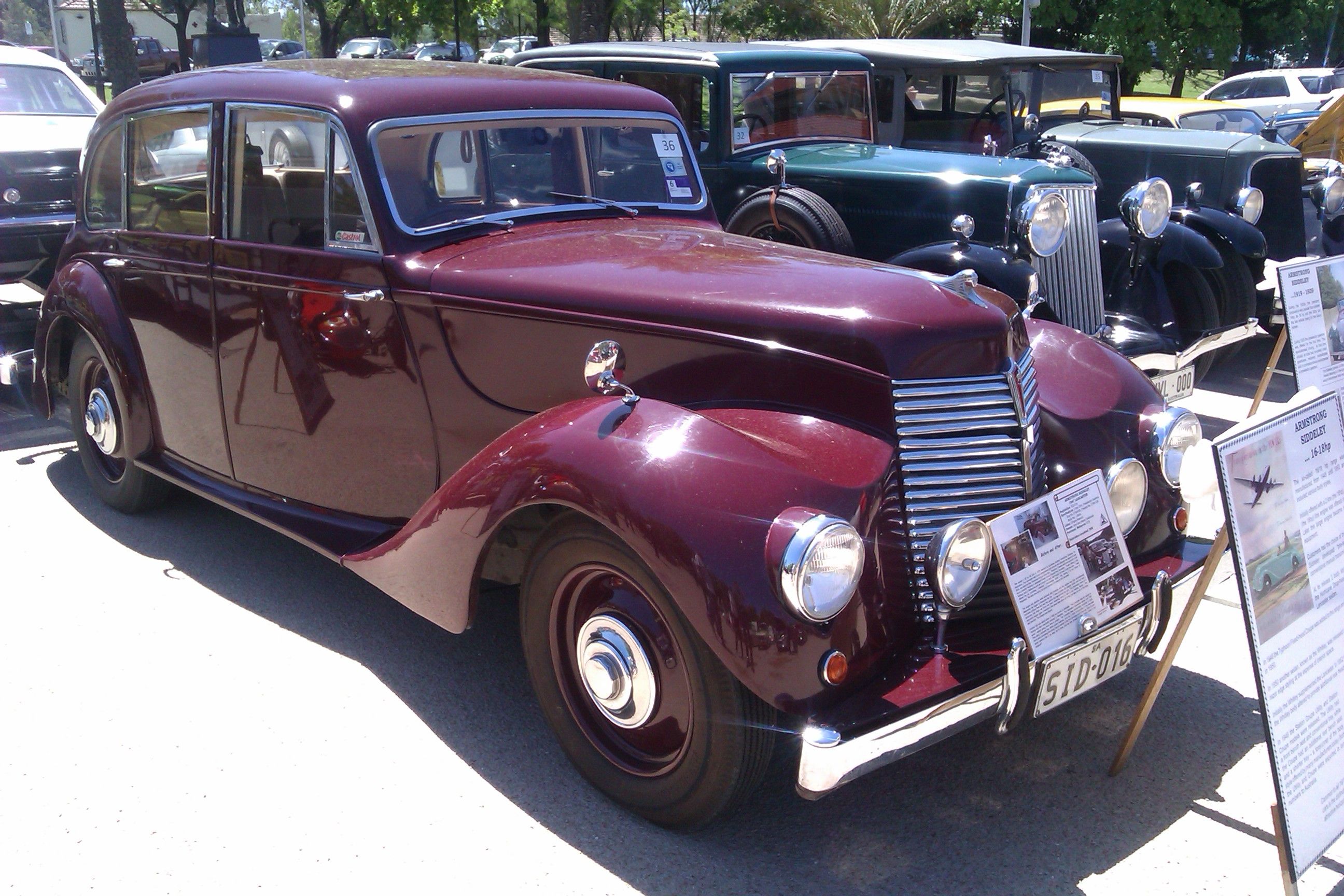
Armstrong Siddeley Lancaster History
The four-door flagship of Armstrong Siddeley's immediate post-war revival — announced days after VE Day, with 3,597 built.
Photo: “Armstrong Siddeley Lancaster 1947” by GTHO / Wikimedia Commons, licensed under CC BY-SA 3.0
History
Armstrong Siddeley announced its all-new post-war range in May 1945, only days after VE Day in Europe — making it one of the very first British manufacturers to reveal a new peacetime car. The Lancaster was the four-door saloon of that range, named after the Avro Lancaster heavy bomber whose Merlin engines were closely associated with Armstrong Siddeley's sister companies in the Hawker Siddeley Group. Its body was a four-door, six-light steel-and-aluminium structure supplied by Mulliners of Birmingham and fitted over a wooden frame.
The Lancaster rode on an all-new chassis with independent front suspension using torsion bars and a live rear axle on leaf springs — a significant step forward from pre-war practice. Early cars used a 70 bhp, 1,991 cc (16 hp) overhead-valve six-cylinder engine; from 1949 the bore was enlarged to give 2,309 cc (18 hp) and 75 bhp. Both a four-speed synchromesh gearbox and the traditional Wilson preselector were offered. A total of 3,597 Lancasters were built before the model was replaced as the Sapphire arrived.
Generations
16hp (2.0-litre) · Original Lancaster
Photo: “Armstrong Siddeley Lancaster 1947” by GTHO / Wikimedia Commons, licensed under CC BY-SA 3.0
1,991 cc / 70 bhp six-cylinder; Mulliners four-door six-light body; independent front torsion-bar suspension; synchromesh or Wilson preselector gearbox.
1947 Photo: “Armstrong Siddeley Lancaster 1947” by GTHO / Wikimedia Commons, licensed under CC BY-SA 3.0
18hp (2.3-litre) · Revised Lancaster
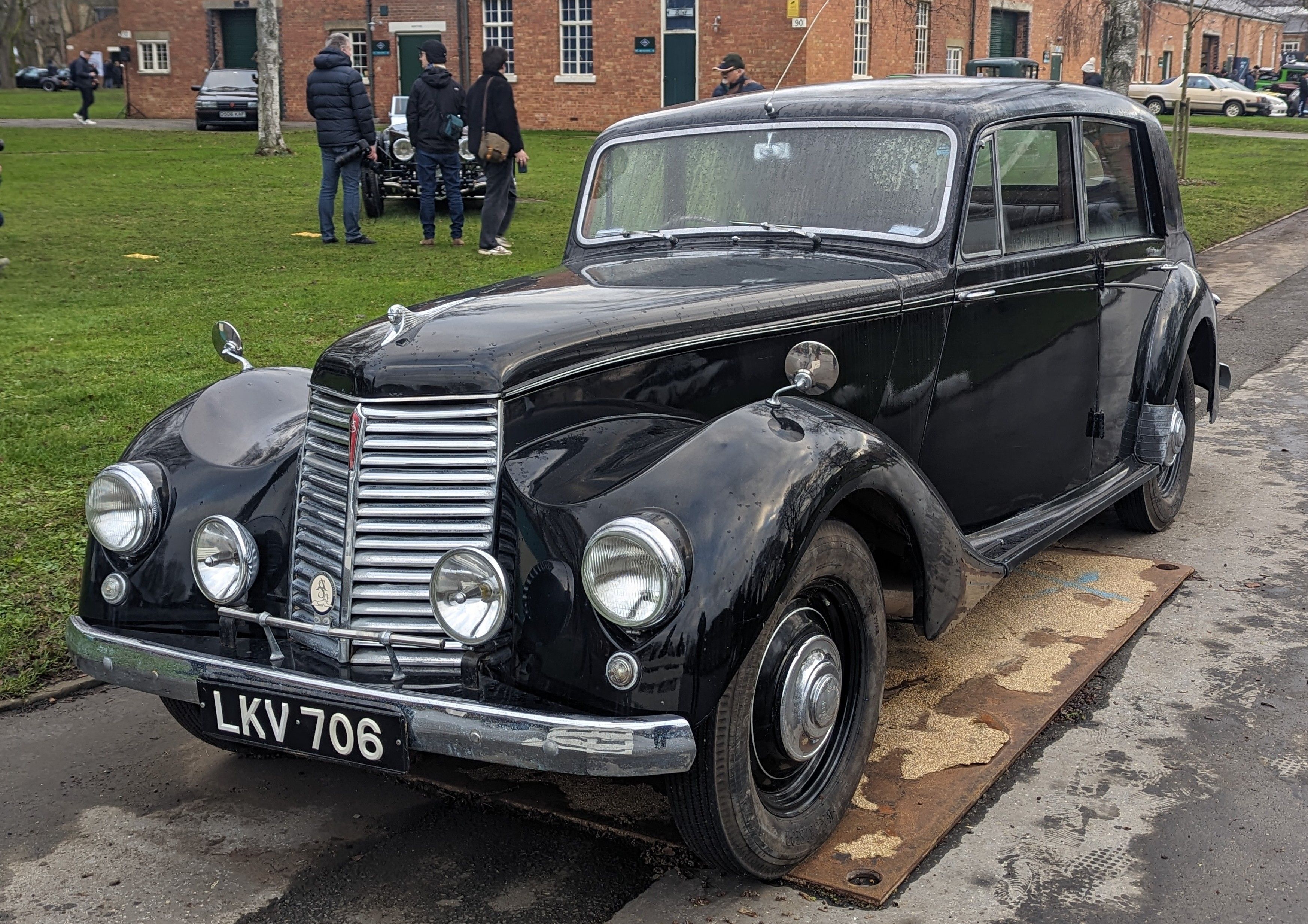
Photo: “1952 Armstrong Siddeley Lancaster” by Calreyn88 / Wikimedia Commons, licensed under CC BY 4.0
Engine enlarged to 2,309 cc / 75 bhp by increasing bore from 65 to 70 mm; bodywork and chassis otherwise unchanged.
1952 Photo: “1952 Armstrong Siddeley Lancaster” by Calreyn88 / Wikimedia Commons, licensed under CC BY 4.0
Body styles
- Four-door saloon
Related models
Collect the nameplate
Find a scale model of the Armstrong Siddeley Lancaster
Search Amazon across available years, colors, and scales. Exact releases vary, so confirm the listing before ordering.