
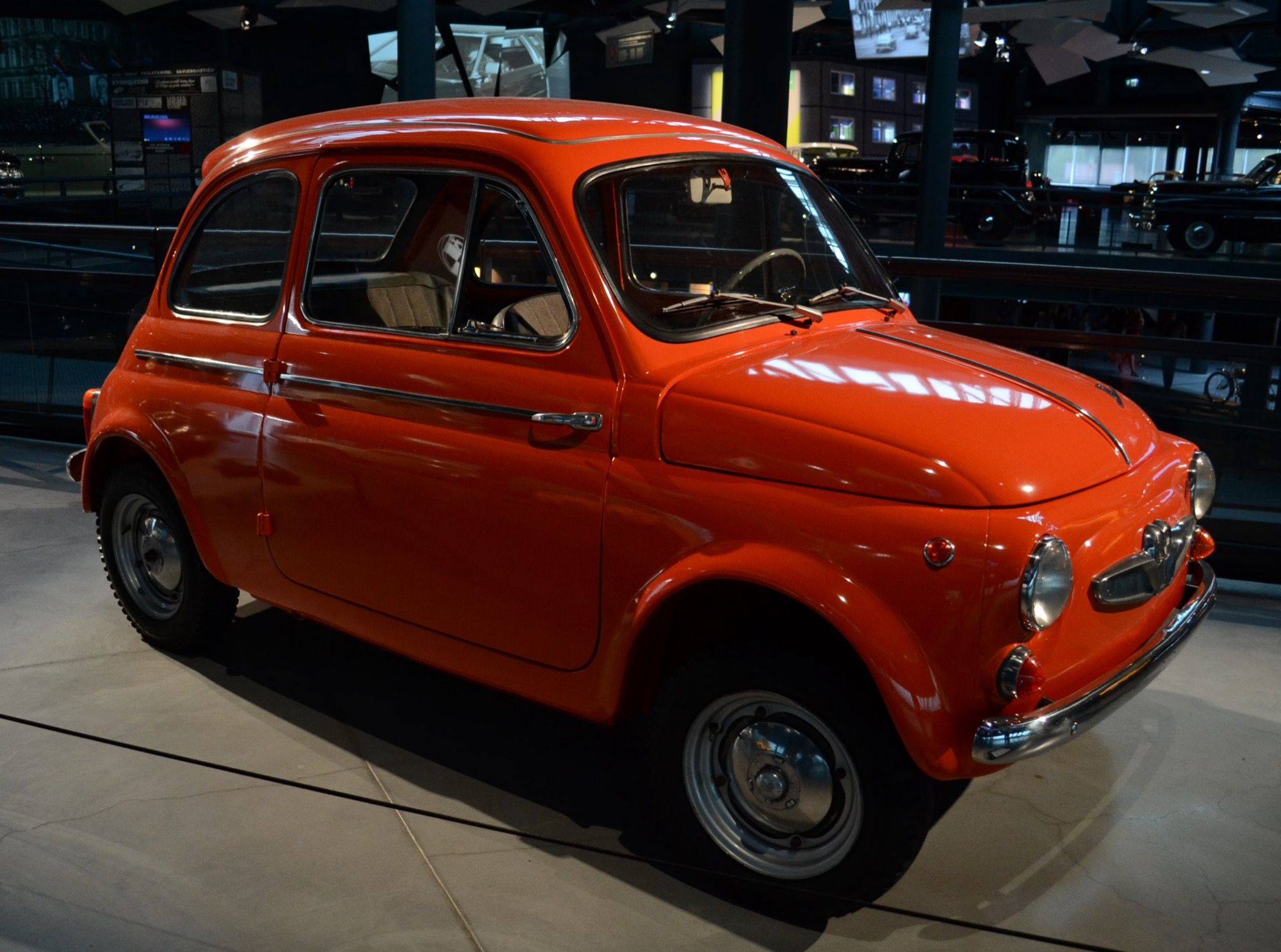
Steyr-Puch 500 History
Austria's beloved post-war city car — a Fiat 500 body with a superior twin-cylinder Steyr-Puch engine, 60,000 built.
Photo: “Puch 500 D (1962).jpg” by Milhouse35 / Wikimedia Commons, licensed under CC BY-SA 4.0
History
After WWII, Steyr-Daimler-Puch did not resume building its own car bodies, instead assembling modified Fiats for the Austrian market from 1949. In 1954 the company struck a licensing deal with Fiat to use the new Nuova 500 bodyshell designed by Dante Giacosa. The result — the Steyr-Puch 500, launched in 1957 — used that body but fitted Steyr-Puch's own running gear throughout: a notably smoother twin-cylinder horizontally-opposed 16 hp engine (later 20 hp), Steyr-built transmission, and revised rear suspension.
The Steyr-Puch 500 proved far smoother and more refined than the Italian original's vibration-prone two-stroke-style twin. It sold well domestically and in Germany, Hungary, Finland, and other export markets. Around 60,000 units were produced between 1957 and 1975.
A performance evolution, the Steyr-Puch 650 T, arrived in 1962 with a larger engine, followed by the rally-focused 650 TR and 650 TR II. These small machines punched well above their weight in competition: in 1966 Polish driver Sobiesław Zasada won the European Rally Championship in a 650 TR II, the smallest car ever to take that title. Production of the entire 500/650 line ended in 1975, drawing a definitive close to Austrian passenger-car manufacturing.
Generations
Steyr-Puch 500 (original) · 500 / 500 D / 500 DL
Photo: “Puch 500 D (1962).jpg” by Milhouse35 / Wikimedia Commons, licensed under CC BY-SA 4.0
Fiat 500 body with Steyr-Puch flat-twin; 500 D (1959) added metal roof; 500 DL added a 20 hp engine.
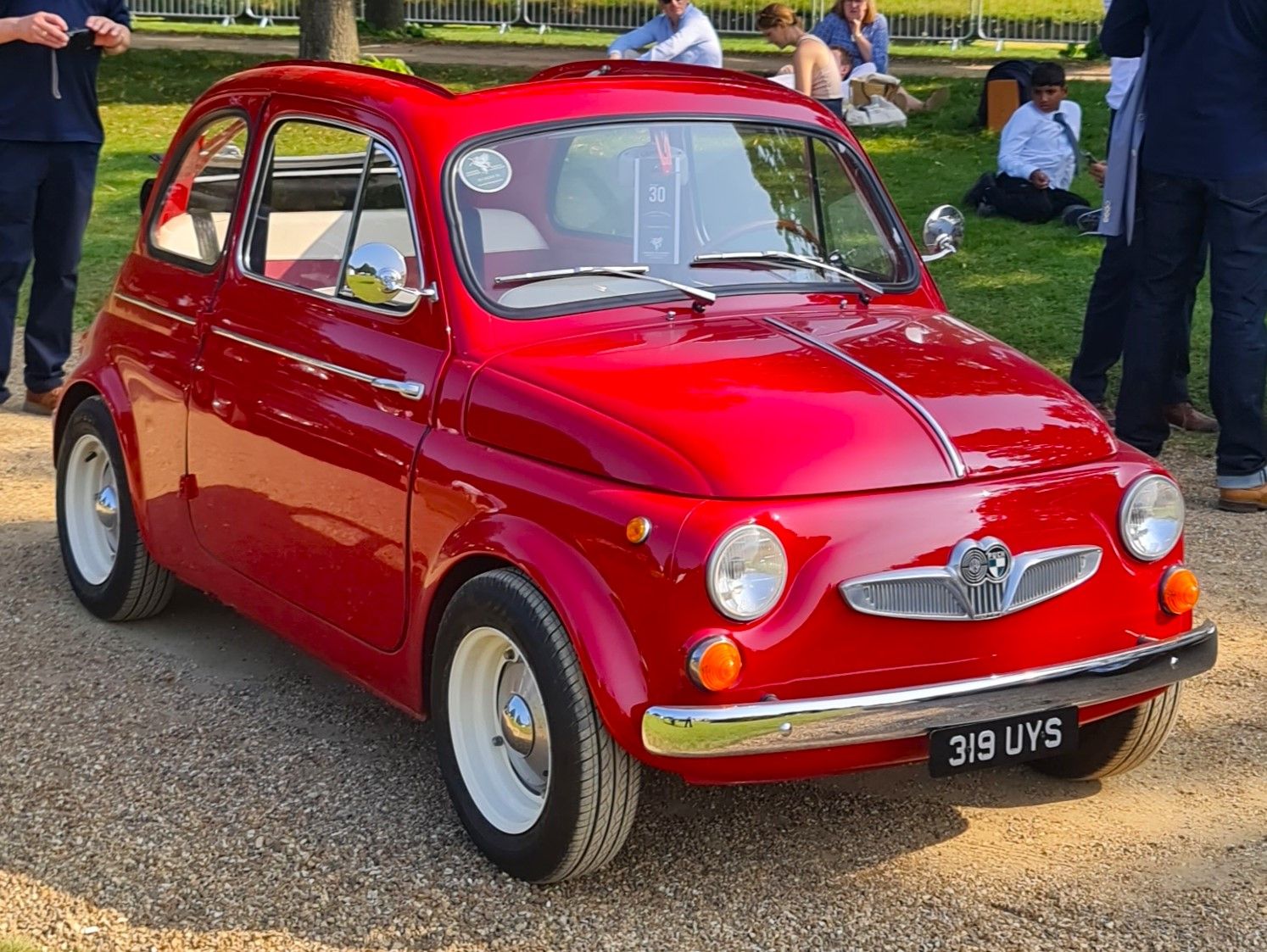
1962 Photo: “1962 Steyr-Puch 500 D HCC21.jpg” by MrWalkr / Wikimedia Commons, licensed under CC BY-SA 4.0
Steyr-Puch 650 series · 650 T / 650 TR / 650 TR II
Enlarged engine for the 650 T; rally-spec 650 TR II won the 1966 European Rally Championship in Zasada's hands.
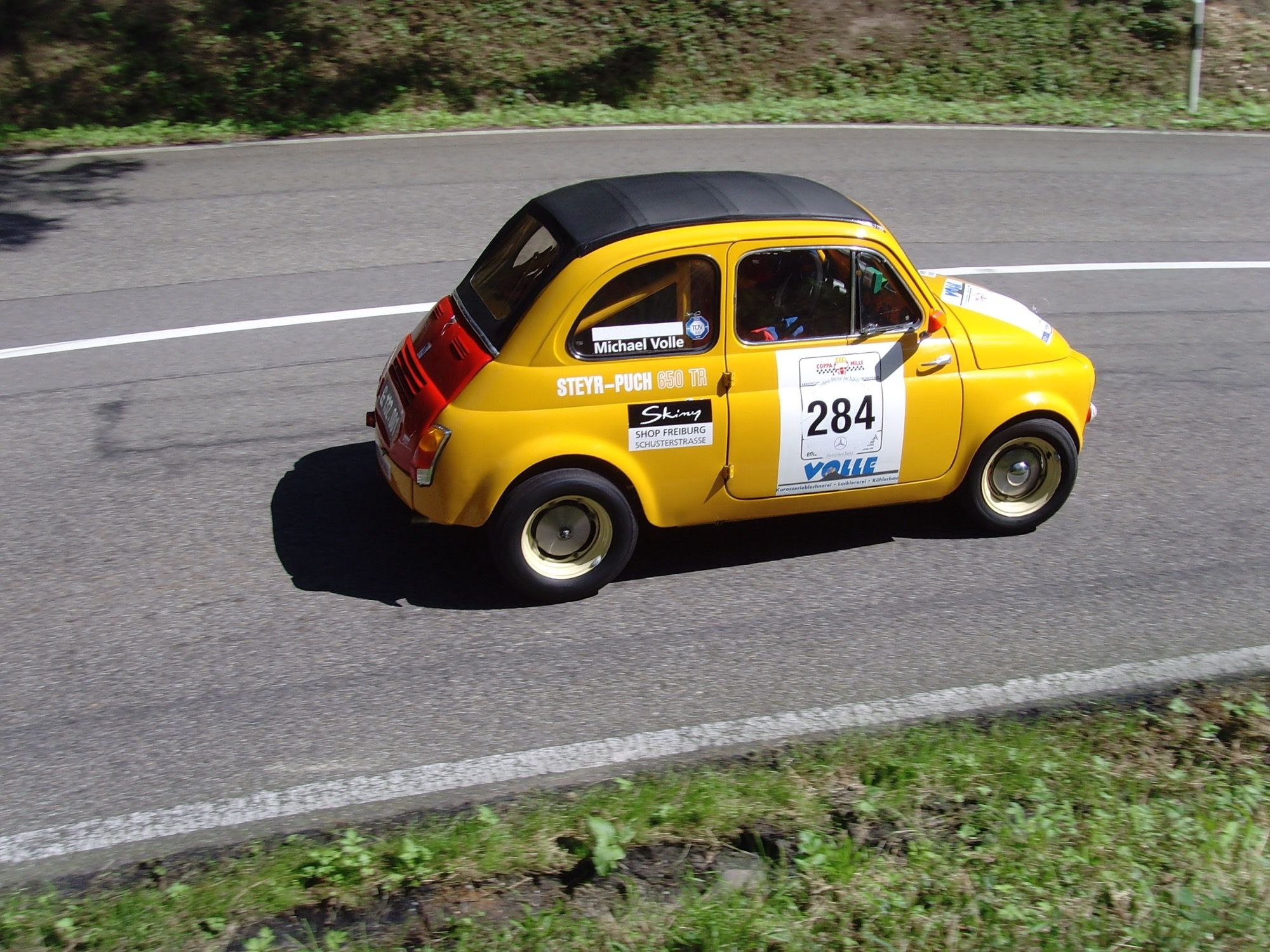
1964 Photo: “Steyr-Puch 650 TR II, 1964.jpg” by Klaus Nahr / Wikimedia Commons, licensed under CC BY-SA 2.0
Body styles
- 2-door saloon
- Cabriolet
Notable special editions & performance variants
Steyr-Puch 650 TR II
Highly tuned rally variant; 1966 European Rally Champion (Sobiesław Zasada) — the smallest car ever to take that title.
Related models
Collect the nameplate
Find a scale model of the Steyr-Puch 500
Search Amazon across available years, colors, and scales. Exact releases vary, so confirm the listing before ordering.