
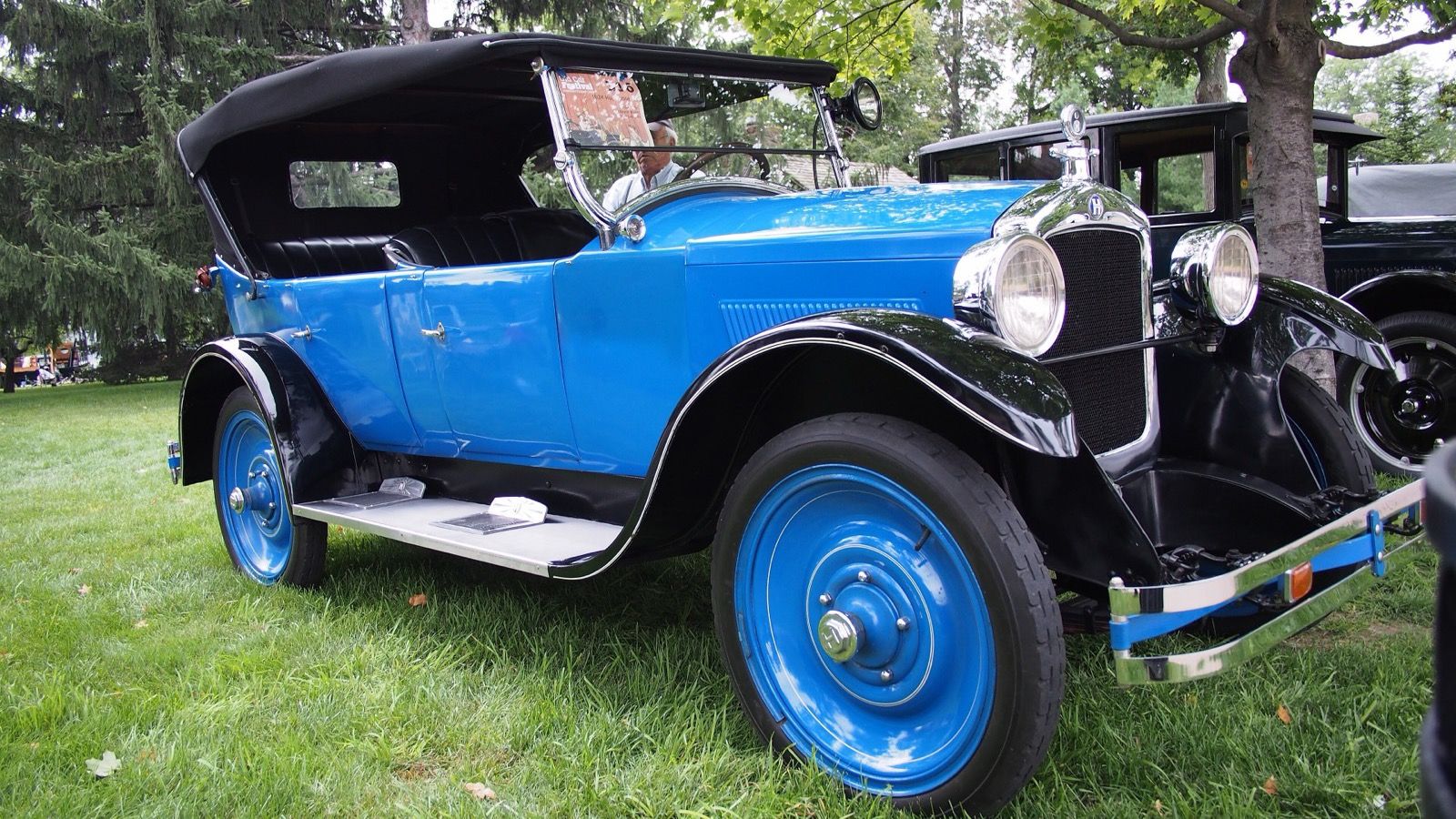
Hupmobile Model R History
Hupmobile's high-volume four-cylinder mainstay (1917–1925) — over 100,000 built, with four-wheel brakes arriving late in the run before the eight-cylinder Series E replaced it.
Photo: “Hupmobile Model R5 (9710119404).jpg” by F. D. Richards from Clinton, MI / Wikimedia Commons, licensed under CC BY-SA 2.0. Cropped to 16:9.
History
Production of the Model R began in October 1917, giving Hupmobile a refined four-cylinder that would anchor the range for nearly a decade. Early cars used an inline-four of roughly 183 cubic inches; later sub-variants displaced around 196 cubic inches producing 39–47 horsepower, a meaningful step for a mid-price touring car. The lineup was wide: touring, phaeton, roadster, coupe, opera coupe, and sedan — open and closed bodies across the full postwar buyer spectrum.
The Model R era spanned the postwar seller's market and the roaring twenties. Total production exceeded 100,000 units across the run, with the company reaching annual outputs in the high tens of thousands during the early 1920s. Late R-series cars (R-14 and R-15 sub-variants, built through mid-1925) received four-wheel brakes and balloon tires, keeping the car competitive as buyer expectations rose.
In 1925 Hupmobile introduced the straight-eight Series E and retired the four-cylinder entirely, betting its future on buyers who wanted more refinement and prestige. The Model R's long, profitable run had funded that gamble; it had been the backbone on which the whole company was built.
Generations
Early Model R · Original four-cylinder
Initial R-series (~183 cu in four-cylinder); postwar demand drove production into the tens of thousands annually.
Late Model R · R-14 / R-15
Photo: “Hupmobile Model R5 (9710119404).jpg” by F. D. Richards from Clinton, MI / Wikimedia Commons, licensed under CC BY-SA 2.0. Cropped to 16:9.
Updated engine (~196 cu in, up to 47 hp), four-wheel brakes, and balloon tires; production ended mid-1925 as the eight-cylinder Series E arrived.
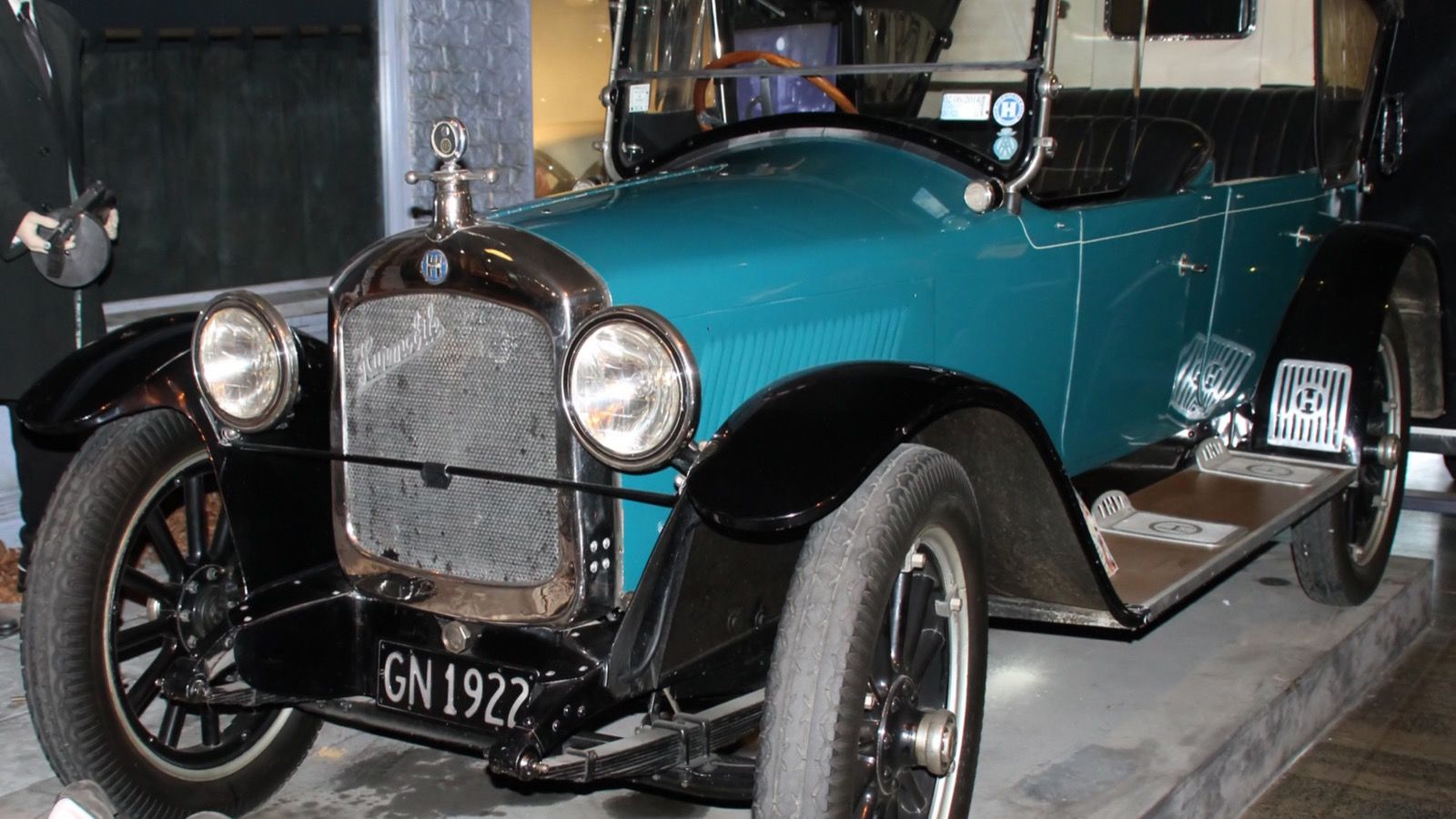
1922 Photo: “1922 Hupmobile Model R (31711052836).jpg” by Tony Hisgett from Birmingham, UK / Wikimedia Commons, licensed under CC BY 2.0. Cropped to 16:9.
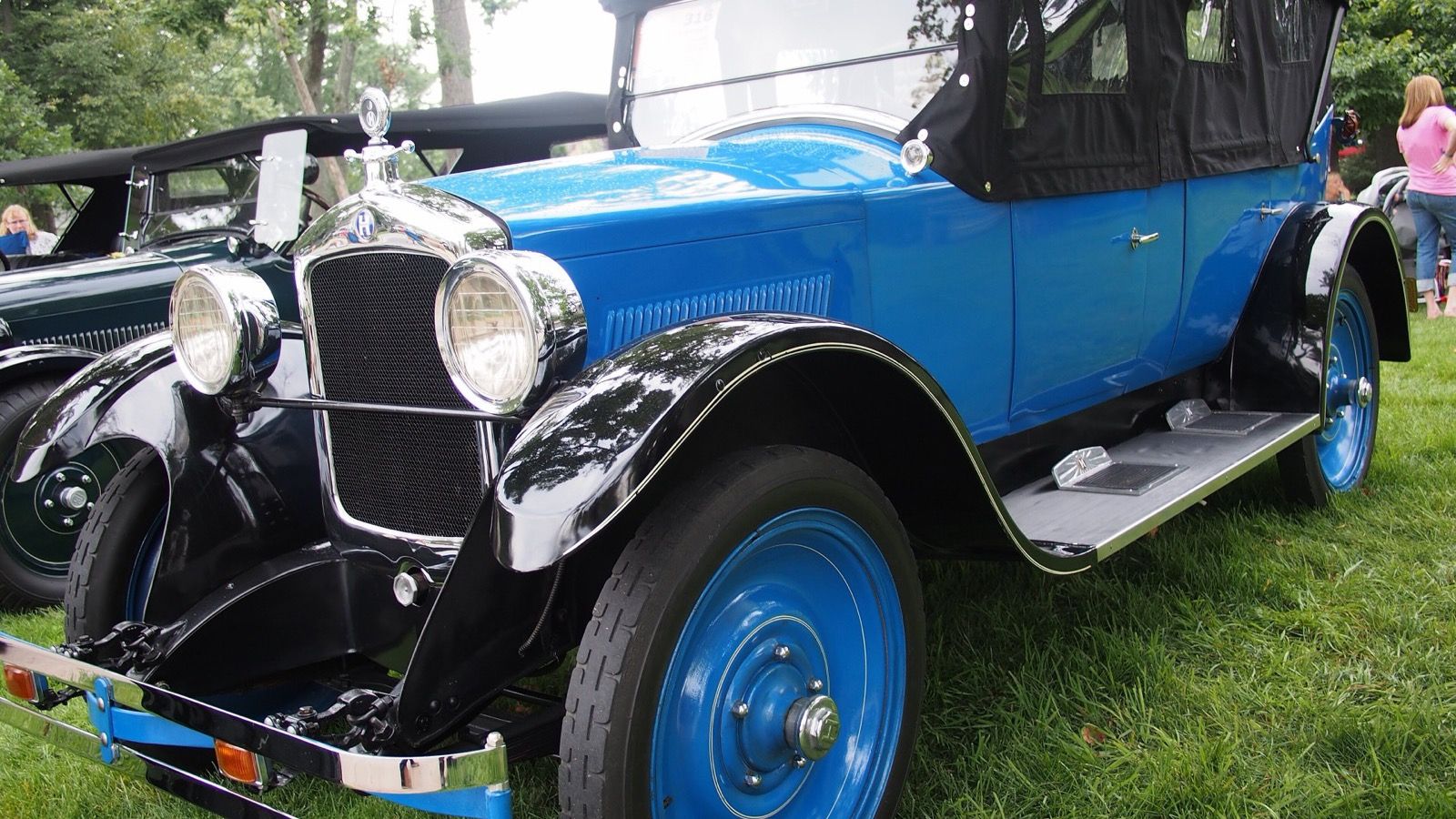
1924 Photo: “1924 Hupmobile RS (9706402362).jpg” by F. D. Richards from Clinton, MI / Wikimedia Commons, licensed under CC BY-SA 2.0. Cropped to 16:9.
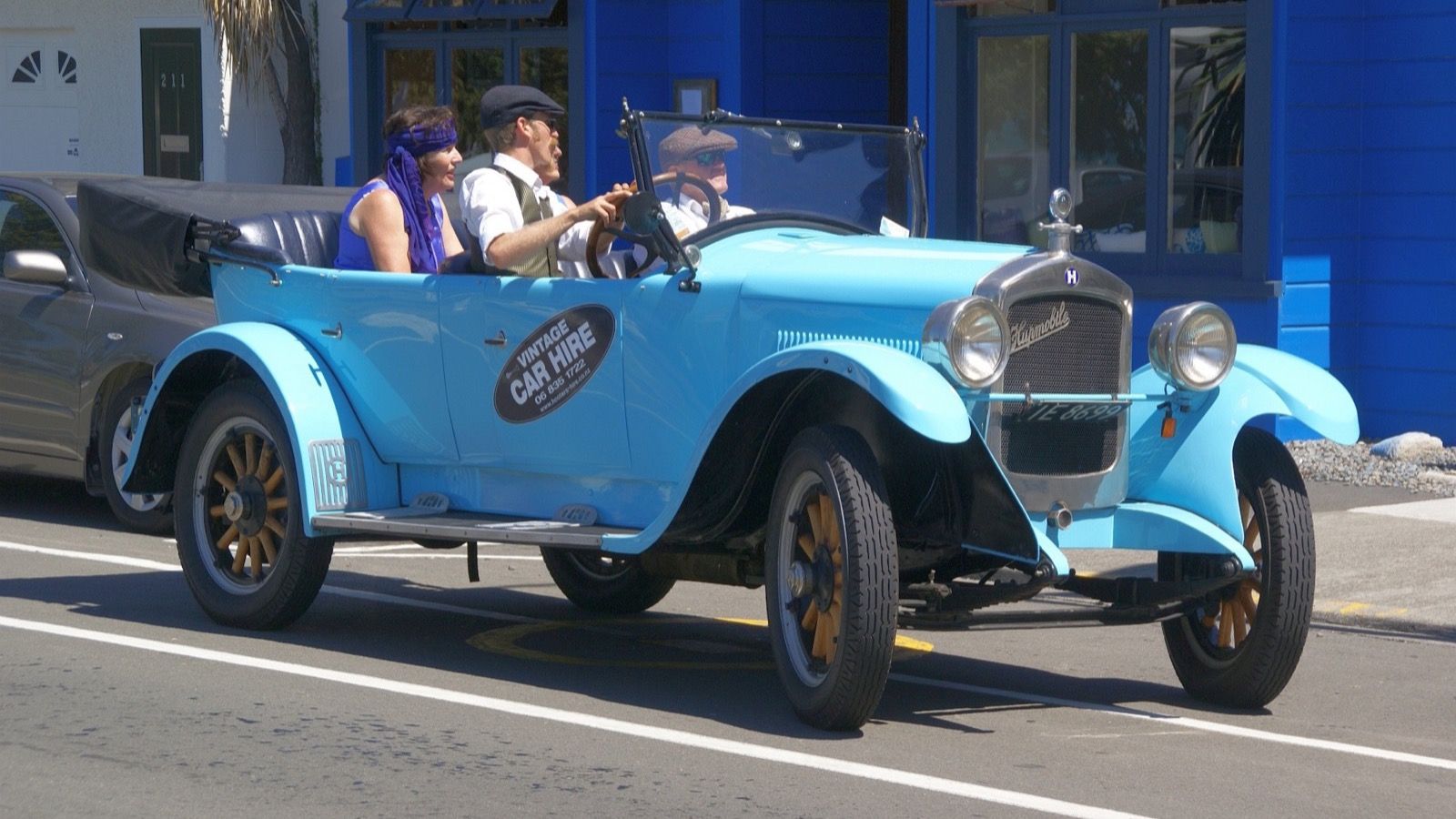
1925 Photo: “1925 Hupmobile Model R (16209383894).jpg” by nzsteam from Christchurch, New Zealand / Wikimedia Commons, licensed under CC BY 2.0. Cropped to 16:9.
Body styles
- Touring
- Phaeton
- Roadster
- Sedan
- Coupe
- Opera Coupe
- Convertible
Related models
Collect the nameplate
Find a scale model of the Hupmobile Model R
Search Amazon across available years, colors, and scales. Exact releases vary, so confirm the listing before ordering.